



What Is a Free-Standing Jib Crane?
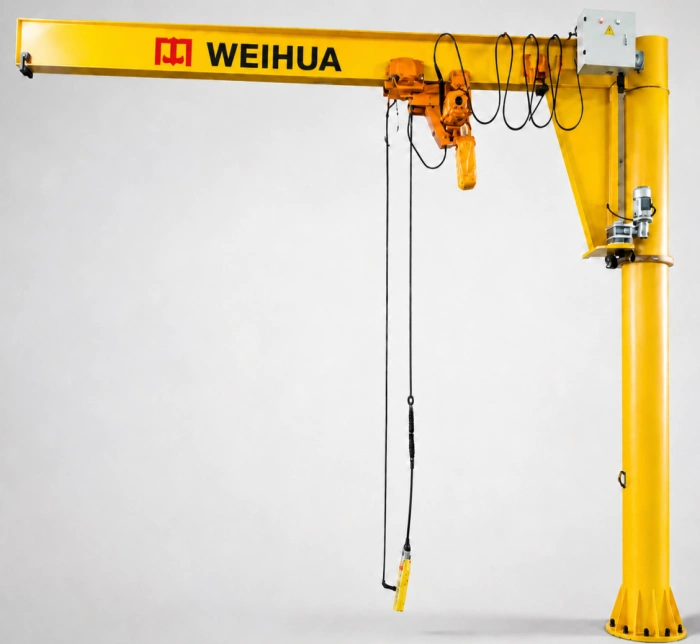
A free-standing jib crane is a type of lifting equipment that is independently installed on the floor without relying on existing building structures such as walls, columns, or overhead crane systems.
Unlike wall-mounted jib cranes, which require a suitable supporting structure, a free-standing jib crane uses its own vertical column and foundation system to provide stable support. This design allows the crane to be installed in different working areas according to specific material handling requirements.
Free-standing jib cranes are widely used in workshops, production lines, maintenance areas, and warehouses for local material handling tasks. They are especially suitable for applications where flexible lifting is required but installing a large overhead crane is unnecessary or impractical.
Compared with other lifting solutions, the main advantage of a free-standing jib crane is its independent installation and flexible application. However, the selection and installation should be based on factors such as lifting capacity, working radius, lifting height, and site conditions.
Where Are Free-Standing Jib Cranes Used?
Free-standing jib cranes are widely used for localized material handling tasks where flexibility, efficiency, and independent installation are required. Unlike overhead cranes that cover a large working area, jib cranes are usually designed for specific workstations or lifting points.
1. Manufacturing Workshops
In manufacturing facilities, free-standing jib cranes are commonly used for handling components, tools, and work pieces during production processes.
Typical applications include:
-Moving parts between workstations
-Supporting assembly operations
-Loading and unloading small equipment
-Improving material handling efficiency
They are especially suitable for areas where frequent lifting is required but a full overhead crane system is unnecessary.
2. Machine Maintenance Areas
Free-standing jib cranes are often installed near large machines or equipment maintenance areas to assist with repair and replacement work.
Common applications include:
-Lifting machine components
-Moving motors and spare parts
-Supporting maintenance operations
The independent installation allows the crane to be positioned close to the equipment where lifting assistance is needed.
3. Production Lines and Assembly Stations
For production lines that require repeated lifting at fixed locations, free-standing jib cranes provide an efficient solution.
They can be used for:
-Material transfer between processes
-Component positioning
-Assembly assistance
The rotating jib arm allows operators to move loads within the working radius, improving workplace efficiency.
4. Warehouses and Loading Areas
Free-standing jib cranes can also be used in warehouses and loading areas for local lifting operations.
Typical uses include:
-Moving goods within a limited area
-Handling heavy packages
-Assisting loading and unloading tasks
They are a practical choice when lifting operations are concentrated in specific locations.
How Is a Free-Standing Jib Crane Installed?
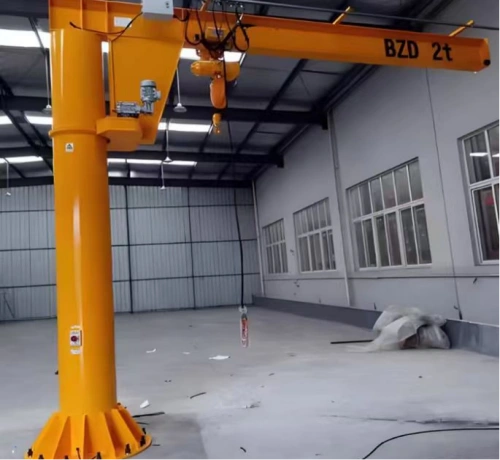
The installation of a free-standing jib crane is different from wall-mounted or building-supported lifting equipment because it relies on its own foundation system. Proper installation is essential to ensure crane stability, safe operation, and long-term reliability.
1. Foundation Preparation
A suitable concrete foundation is required before installing a free-standing jib crane. The foundation must be designed according to the crane capacity, working conditions, and installation environment.
Important considerations include:
-Floor strength and stability
- Foundation size and depth
- Anchor bolt arrangement
- Installation location
A properly prepared foundation provides sufficient support for the crane column and helps maintain safe operation during lifting activities.
2. Column Installation
After the foundation is completed, the crane column is installed and fixed in position.
The main steps include:
- Positioning the crane column on the foundation
- Fixing the column with anchor bolts
- Checking vertical alignment
- Ensuring the structure is stable
The accuracy of column installation directly affects crane performance and rotation smoothness.
3. Jib Arm and Hoist Installation
Once the column is installed, the jib arm and lifting system are assembled.
The installation process usually includes:
-Installing the rotating jib arm
-Mounting the electric or manual hoist
-Connecting the electrical system
-Adjusting the rotation mechanism
After assembly, the crane should be tested to confirm that all movements operate correctly.
4. Installation Requirements Before Operation
Before putting the crane into use, several factors should be checked:
Lifting capacity matches the application
Working radius meets operational requirements
Rotation range is suitable for the working area
Electrical supply is correctly connected
Safety devices function properly
Proper installation ensures that the free-standing jib crane can provide stable and efficient lifting performance throughout its service life.
How to Choose the Right Free-Standing Jib Crane?
Choosing the right free-standing jib crane requires a clear understanding of the lifting requirements, working environment, and installation conditions. A suitable configuration can improve operational efficiency and ensure safe and reliable performance.
1. Determine the Required Lifting Capacity
The lifting capacity is the first factor to consider when selecting a free-standing jib crane.
Customers should confirm:
-Maximum load weight
-Type of materials being lifted
-Lifting frequency
The crane capacity should match the actual application. Selecting a crane with excessive capacity may increase investment costs, while insufficient capacity may affect safety and service life.
2. Consider the Working Radius and Jib Length
The working radius determines the area that the crane can cover.
Important factors include:
-Distance between lifting points
-Required rotation range
-Available installation space
A longer jib arm provides a larger working area, but it also requires a stronger foundation and supporting structure.
3. Confirm Lifting Height Requirements
The lifting height should be selected according to the actual operation needs.
Consider:
-Required hook height
-Height of materials being handled
-Available installation space
Proper lifting height ensures that the crane can complete lifting tasks efficiently without unnecessary limitations.
4. Evaluate Installation Conditions
Since a free-standing jib crane depends on its own foundation, the installation environment is very important.
Before installation, customers should check:
-Floor or foundation conditions
-Available installation area
-Surrounding working space
-Possible obstacles
A suitable installation location helps ensure stable operation and maximum working efficiency.
5. Select the Appropriate Hoisting System
Free-standing jib cranes can be equipped with different lifting devices depending on application requirements, such as:
-Electric wire rope hoists
-Electric chain hoists
-Manual hoists
The choice depends on:
-Lifting frequency
- Load characteristics
-Required operation efficiency
Provide Complete Project Information for Better Selection
To recommend a suitable free-standing jib crane, customers should provide:
-Lifting capacity
-Jib length
-Lifting height
-Rotation angle
-Working frequency
-Installation location
-Power supply requirements
With the correct information, a crane manufacturer can design a solution that matches the actual working conditions.
Frequently Asked Questions About Free-Standing Jib Crane
What is a free-standing jib crane?
A free-standing jib crane is an independently installed lifting device that uses its own column and foundation system instead of relying on building walls or existing structures. It is commonly used for localized material handling in workshops, production areas, and maintenance stations.
Does a free-standing jib crane need a foundation?
Yes. A free-standing jib crane requires a suitable concrete foundation to provide stable support. The foundation design depends on factors such as lifting capacity, jib length, working conditions, and installation environment.
Can a free-standing jib crane rotate?
Yes. Most free-standing jib cranes are designed with a rotating jib arm. The rotation angle can be customized according to the working area and application requirements, allowing operators to move loads within the required range.
