


 English
 Español
 Русский
 العربية
 Français
 Deutsch
 Português
 Tiếng Việt
 Thai
Thai
 Bahasa Indonesia
 Türkçe
 Italiano

What Exactly Is a Portal Gantry Crane?
A portal gantry crane normally consists of a main bridge structure supported by gantry legs, with the complete crane traveling on rails installed at ground level.
The open space between the legs forms the portal.
Depending on the application, the lifting system may use different hoist or trolley arrangements. The main girder configuration, lifting mechanism, operating method, and structural design should all be selected according to the specific project.
The crane is not defined by one fixed capacity or span.
Its design depends on factors such as:
-lifting capacity;
-crane span;
-lifting height;
-runway length;
-load type;
-working frequency;
-environmental conditions;
-required clear space under the portal.
This last point is particularly important.
For many portal crane projects, the buyer needs to define not only how wide the crane should be, but also what must pass underneath it.
Why Customers Choose a Portal Gantry Crane?
In many heavy handling projects, space below the crane is just as important as lifting capacity.
A customer may need to:
· unload cargo from trucks;
· move steel products between storage areas;
· handle machinery in an open yard;
· lift large fabricated components;
· keep transport lanes open below the crane;
· cover a long loading or production area.
A Portal Gantry Crane allows the lifting mechanism to move above the working area while the supporting legs remain outside the main load path.
This can make material flow easier than using equipment that occupies the center of the yard.
The crane can be especially useful when loads need to move in three directions:
up and down, across the span, and along the crane runway.
Where Portal Gantry Cranes Are Useful?
Portal cranes are suitable for many large-scale handling environments.
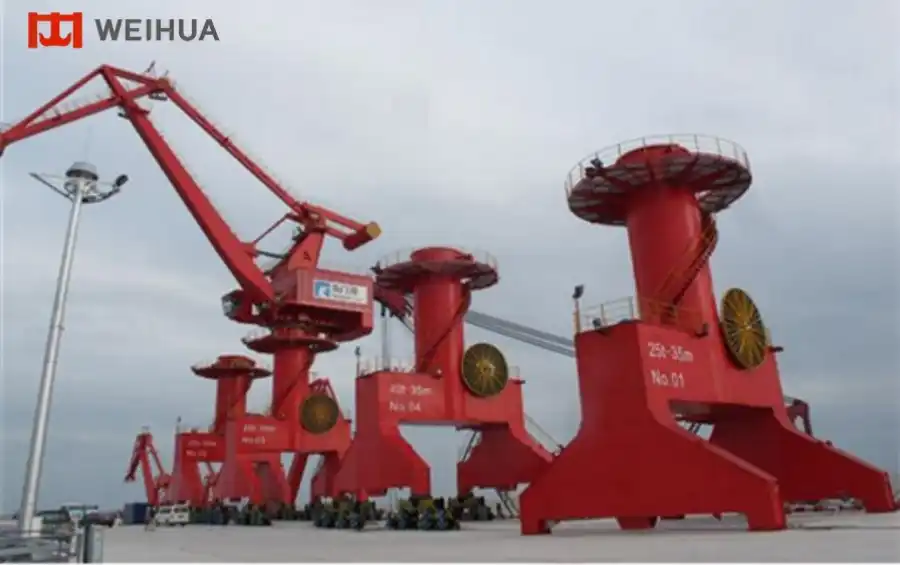
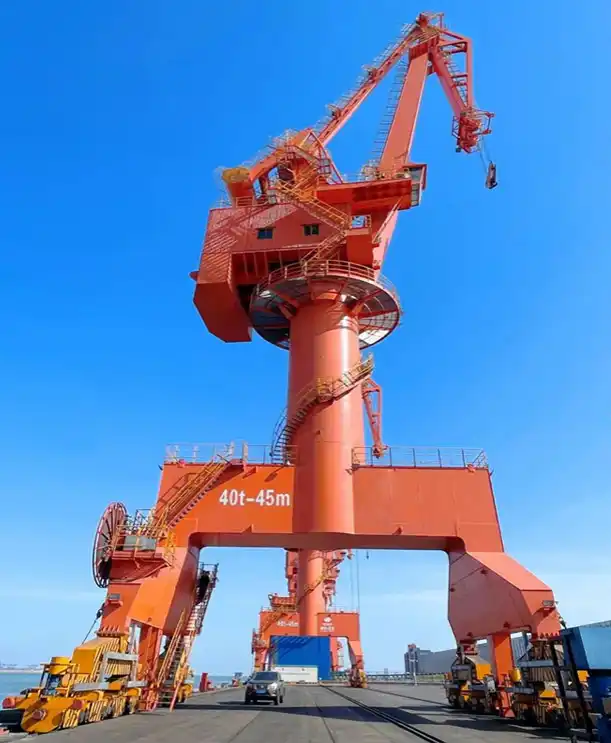
Port and Terminal Areas
Ports often require cranes that can lift cargo while leaving enough ground clearance for transportation equipment.
The crane may need to work around trucks, rail systems, or cargo storage areas.
Site layout, outdoor conditions, and working frequency become especially important in this application.
Steel and Fabrication Yards
Long steel structures and fabricated components can be difficult to handle with forklifts alone.
A portal gantry crane provides overhead lifting while keeping much of the ground area open.
This can help with loading, transfer, assembly, and storage operations.
Machinery and Heavy Equipment Handling
Large industrial equipment may need to be transferred between assembly, testing, and loading areas.
A portal crane can cover several positions along one runway.
This is useful when the equipment is too heavy or too large for normal mobile handling.
Outdoor Storage Yards
When materials are stored across a long yard, crane travel can reduce the need to repeatedly reposition mobile lifting equipment.
The crane travels to the load rather than requiring the load to be moved to a fixed lifting point.
Single-Girder or Double-Girder?
Portal gantry cranes may use different bridge arrangements depending on the project.
A single-girder design may be suitable for some moderate-duty applications.
A double-girder arrangement may be more appropriate when the project involves higher capacity, larger span, heavier duty, or a lifting trolley configuration that requires more structural space.
There is no useful rule that one type is always better.
The decision should be made according to:
capacity, span, lifting height, duty, load type, and required structural performance.
For a buyer, the correct question is not “Which one is stronger?”
It is “Which configuration fits my operating conditions without unnecessary cost or weight?”
Working Duty Changes the Crane Specification
A crane that lifts a heavy load twice per day is not doing the same job as a crane handling material continuously for two shifts.
Even if the rated capacity is identical, the required component selection may be different.
Tell the supplier:
-operating hours per day;
-number of shifts;
-approximate lifts per hour;
-average load;
-frequency of full-capacity lifts;
-frequency of crane travel.
This information helps determine the working duty of the crane.
For a port, production yard, or busy loading area, this point can significantly affect long-term reliability and maintenance requirements.
Control Method Should Fit the Working Area
The operator needs a clear view of both the load and surrounding traffic.
Depending on the project, suitable operating methods may include pendant control, remote control, or cabin operation.
Remote control can be useful when the operator needs to move around the loading area.
A cabin may be more suitable for some large or intensive operations where the crane travels over a wide area.
The correct choice depends on:
-visibility;
-crane size;
-load dimensions;
-traffic below the crane;
-operating frequency;
-site safety procedures.
Control method should be discussed as part of the operating process, not chosen only by preference.
Do You Need Cantilever Coverage?
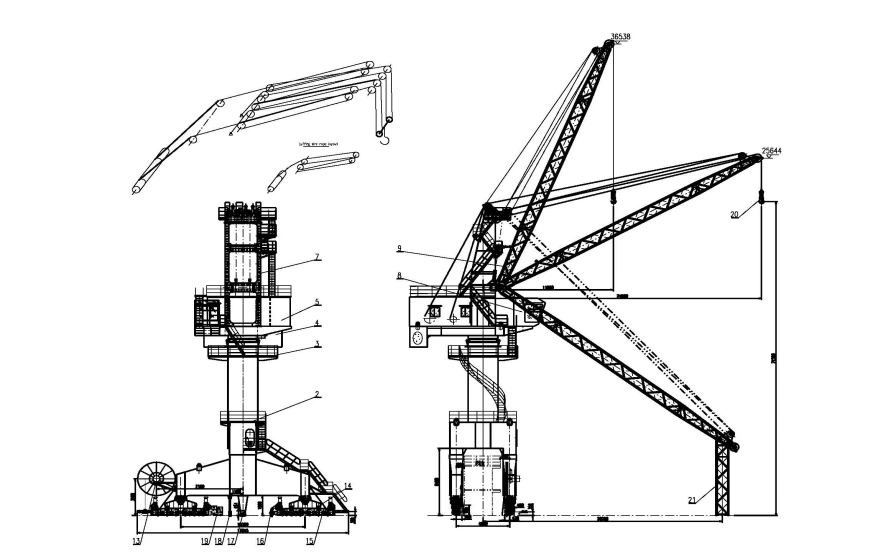
Some portal gantry crane layouts may require lifting coverage outside the main span.
For example, a customer may want to pick up material from a truck positioned beside the runway and then move it into the main working area.
Depending on the crane design, cantilever arrangements may be considered.
If outside-rail coverage is important, tell the supplier the required outreach and load condition.
Do not assume that the crane automatically covers areas beyond the legs.
The required lifting envelope should be clearly marked on the site layout.
How to Compare Quotations Properly?
Two suppliers may both quote a “50-ton Portal Gantry Crane,” but the actual scope can be very different.
Check whether the quotations use the same:
-lifting capacity;
-span;
-lifting height;
-portal clearance;
-working duty;
-control method;
-outdoor design conditions;
-crane travel speed;
-lifting arrangement;
-electrical scope;
-rail scope;
-foundation information;
-installation scope.
Also ask what is excluded.
Typical project responsibilities may include:
-civil foundation;
-crane rails;
-local power supply;
-installation labor;
-erection equipment;
-commissioning support;
-transport to site.
Understanding the supply boundary is more useful than comparing only the final price.
When Is a Portal Gantry Crane the Right Choice?
A Portal Gantry Crane is a strong option when you need heavy lifting coverage but also need the ground area below the crane to remain accessible.
It is especially worth considering when:
-trucks or rail vehicles must pass under the crane;
-the lifting area is outdoors;
-a large yard needs overhead coverage;
-loads are too heavy or bulky for forklifts;
-material needs to move between several positions along one runway;
-no suitable building structure is available for an overhead crane.
The crane should be selected around the whole material-handling process.
Start with the load, then define the portal clearance, span, lifting height, runway length, operating frequency, and environmental conditions.
That approach leads to a much more practical design.
For a fast Portal Gantry Crane quotation, send your maximum load, load dimensions, span, lifting height, required portal clearance, travel length, working frequency, power supply, project location, and site drawing.
With those details, the supplier can evaluate how the crane needs to work in your actual yard instead of simply offering a standard gantry crane based on tonnage.
