


 English
 Español
 Русский
 العربية
 Français
 Deutsch
 Português
 Tiếng Việt
 Thai
Thai
 Bahasa Indonesia
 Türkçe
 Italiano

What Is a Single Beam Gantry Crane?
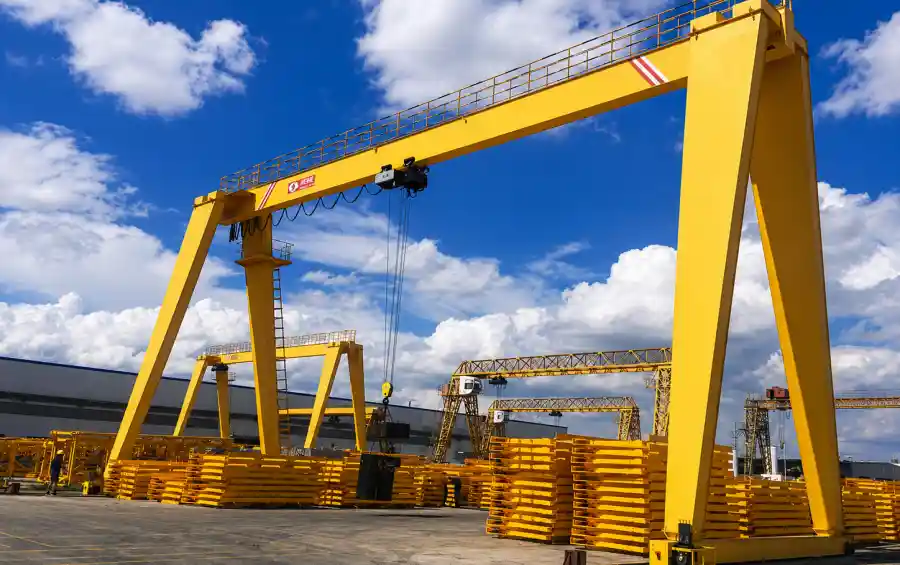
A Single Beam Gantry Crane, also known as a single girder gantry crane, is a type of gantry lifting equipment that uses one main girder supported by two legs or end carriages.
The lifting mechanism usually travels along the bottom flange of the main beam through an electric hoist. The entire crane moves along ground rails, allowing materials to be lifted, transported and positioned within a specific working area.
The basic structure includes:
-Main girder
-Supporting legs
-End carriages
-Electric hoist and trolley
-Traveling mechanism
-Electrical control system
This relatively simple design makes it suitable for applications where lifting requirements are clear and space utilization is important.
Why Choose a Single Beam Gantry Crane?
The main advantage of a single beam gantry crane is its balance between performance and investment.
For many customers, the lifting requirement is not extremely heavy, but they still need a reliable crane that can improve productivity. A single beam design can provide the necessary lifting capability without adding unnecessary structural complexity.
Key advantages include:
1. Economical Investment
Compared with heavier double girder gantry cranes, single beam designs generally require less steel structure and a simpler manufacturing process.
This makes them a cost-effective choice for:
-Small and medium factories
-Maintenance workshops
-Material storage yards
-Equipment assembly areas
2. Flexible Installation
A gantry crane does not rely on the building roof structure like an overhead crane system.
This allows it to be installed in locations such as:
-Indoor workshops
-Outdoor yards
-Temporary production areas
-Equipment storage zones
For facilities where adding supporting structures is difficult, a ground-supported gantry crane can provide greater flexibility.
3. Efficient Material Handling
The crane allows operators to move loads horizontally and vertically, reducing manual handling and improving workflow.
Typical operations include:
-Loading and unloading materials
-Moving machine components
-Transporting steel structures
-Handling production parts
-Supporting equipment maintenance
4. Easy Maintenance
The simple structure makes inspection and maintenance more convenient.
Regular checks of the hoist, electrical components, wheels and braking system help ensure safe and stable operation.
How Does a Single Beam Gantry Crane Work?
The working principle is straightforward.
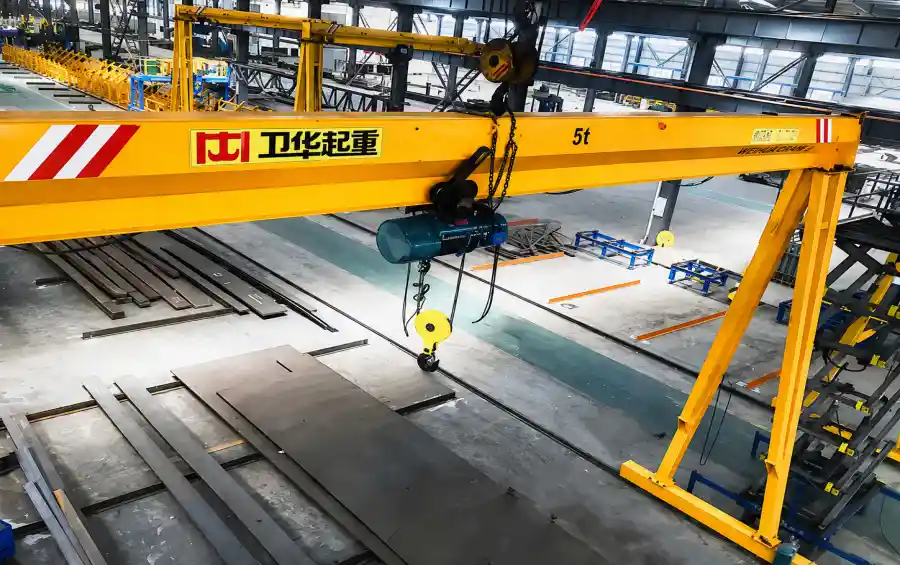
The electric hoist lifts the load vertically, while the trolley moves along the main beam. The crane itself travels along rails installed on the ground, allowing materials to be transferred between different positions.
During operation:
1.The operator attaches the load using a hook or lifting device.
2.The hoist lifts the material to the required height.
3.The trolley moves along the beam.
4.The crane travels along the runway rails.
5.The load is placed at the target location.
This movement pattern makes the crane suitable for repeated lifting tasks within a fixed working area.
Common Applications of Single Beam Gantry Crane
Single beam gantry cranes are widely used in industries where flexible material handling is required.
Manufacturing Workshops
In manufacturing facilities, the crane can assist with moving raw materials, fabricated parts and finished products between different working stations.
Machinery Assembly
Large components such as motors, gearboxes and mechanical parts can be lifted and positioned more accurately during assembly.
Steel Fabrication
Steel plates, profiles and welded structures often require lifting equipment during fabrication and transportation.
Warehouses and Storage Areas
The crane can improve loading and unloading efficiency where forklifts alone cannot provide precise lifting operations.
Outdoor Material Yards
Weather-resistant configurations can be used for outdoor applications such as construction material storage and equipment handling.
Single Beam Gantry Crane Selection Guide
Choosing the right crane requires considering the actual working conditions rather than only focusing on lifting capacity.
Important factors include:
Lifting Capacity
The rated lifting capacity should match the maximum load weight required during operation.
Customers should consider:
-Maximum load weight
-Frequency of lifting operations
-Additional lifting tools or attachments
Selecting a suitable capacity helps ensure both safety and long-term reliability.
Span Length
The span refers to the distance between the two supporting legs.
A larger span provides a wider working area, but the crane structure must also be designed according to load requirements and operating conditions.
Lifting Height
The required lifting height depends on:
-Material size
-Storage arrangement
-Workshop clearance
-Production process requirements
Providing accurate height information helps avoid limitations after installation.
Working Environment
The installation environment affects crane configuration.
Important conditions include:
-Indoor or outdoor operation
-Temperature range
-Dust or corrosive environment
-Power supply conditions
-Rail foundation conditions
A suitable design can improve crane performance and service life.
Operating Frequency
A crane used occasionally for maintenance has different requirements from one working continuously on a production line.
Customers should provide information about:
-Working hours per day
-Number of lifting cycles
-Required operating speed
This helps determine a suitable hoist and drive system.
Safety Considerations for Single Beam Gantry Crane Operation
Safe operation is essential for all lifting equipment.
Operators should:
-Follow rated load limits
-Inspect the crane before operation
-Avoid lifting unstable loads
-Maintain proper communication during lifting
-Perform regular maintenance
A well-designed crane combined with correct operation procedures can improve workplace safety and efficiency.
Frequently Asked Questions
What is the difference between a single beam and single girder gantry crane?
They refer to the same type of crane. “Single beam” and “single girder” are commonly used terms describing a gantry crane with one main supporting beam.
Can a single beam gantry crane be used outdoors?
Yes. It can be designed for outdoor applications with suitable protection measures according to the working environment, such as weather protection and corrosion-resistant treatment.
What type of hoist is used with a single beam gantry crane?
Electric hoists are commonly used because they provide convenient lifting and traveling operations. The hoist type depends on lifting capacity, height and working frequency.
How long can a single beam gantry crane last?
The service life depends on factors such as operating conditions, maintenance quality, workload and correct usage. Regular inspection and maintenance can significantly extend equipment life.
Is a single beam gantry crane suitable for small factories?
Yes. Its compact structure and flexible installation make it suitable for many small and medium-sized workshops that need reliable lifting assistance.
Can the crane be customized?
Yes. The crane structure, lifting height, span, control method and other configurations can be adjusted according to the customer’s working conditions.
Conclusion
A Single Beam Gantry Crane is an efficient and economical choice for many industrial lifting applications. Its simple structure, flexible installation and reliable operation make it suitable for workshops, warehouses, production areas and outdoor material handling sites.
The best crane solution is not always the largest one. A properly selected single beam gantry crane can provide the right lifting performance while keeping investment and maintenance costs under control.
When planning a gantry crane project, providing detailed information about your load requirements, working environment and application process will help achieve a safer and more efficient lifting solution.
