



What Is a Ship-to-Shore Gantry Crane?
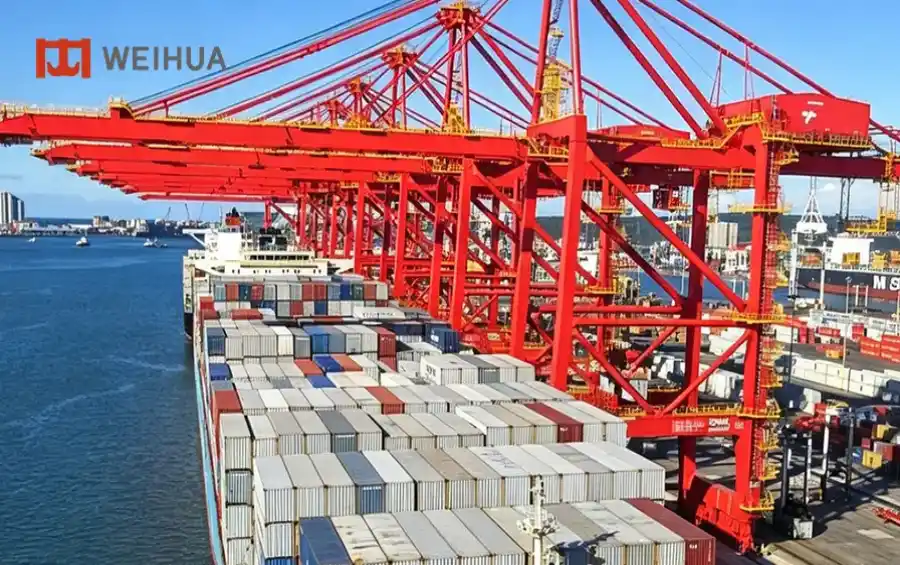
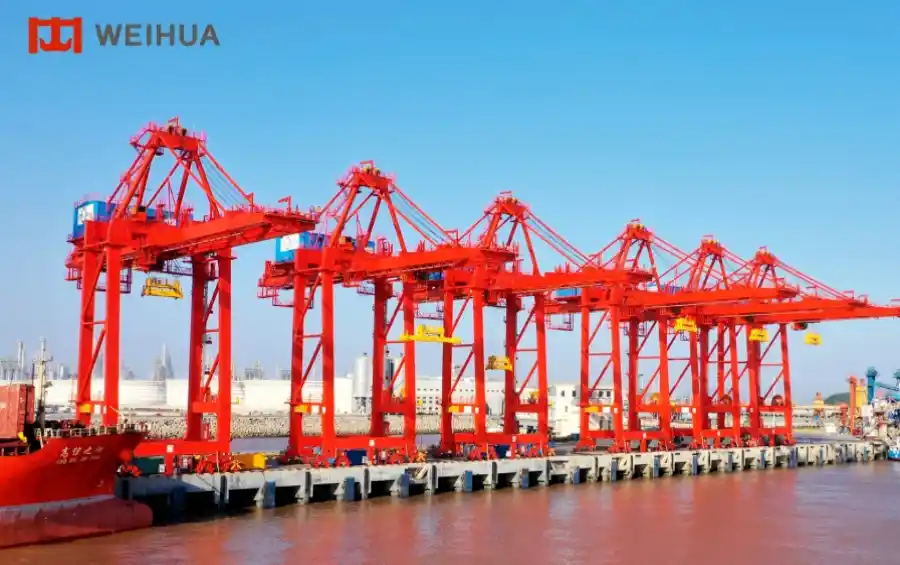
A Ship-to-Shore Gantry Crane, commonly called an STS crane or container quay crane, is a large dockside crane used to load and unload containers between container ships and the terminal quay.
It is one of the most important pieces of equipment in a modern container terminal. The crane travels along rails installed beside the quay and uses a container spreader to lift containers from ship decks, vessel holds, trucks, or terminal transport vehicles.
Ship-to-Shore Gantry Cranes are designed for high lifting speeds, accurate positioning, reliable continuous operation, and efficient handling of different container sizes. They are widely used in commercial ports, container terminals, logistics hubs, and intermodal transport facilities.
How Does a Ship-to-Shore Gantry Crane Work?
An STS crane consists of a large steel portal structure with a waterside boom extending over the ship. A trolley moves horizontally along the boom and girder, while the hoisting mechanism raises and lowers the spreader.
The typical operating cycle includes:
1. The trolley moves toward the ship.
2. The spreader is lowered onto a container.
3. The twist locks connect to the container corner castings.
4. The container is lifted from the vessel.
5. The trolley carries the container toward the landside.
6. The container is lowered onto a truck, trailer, automated guided vehicle, or terminal tractor.
7. The spreader releases the container and begins the next cycle.
The same process is reversed when loading containers onto a ship.
Main Components of an STS Crane
Steel Portal Structure
The portal structure supports the crane machinery and transfers loads to the crane travel wheels. It is designed to resist vertical lifting loads, wind loads, dynamic forces, and operating stresses.
Waterside Boom
The waterside boom extends above the vessel and allows the trolley to reach container rows across the ship. Depending on terminal requirements, the boom may be raised when the crane is not operating or when ships need to pass nearby.
Main Girder
The main girder supports trolley travel between the waterside and landside areas. Its length and structural design depend on vessel size, outreach, backreach, and lifting capacity.
Trolley Mechanism
The trolley carries the spreader and travels horizontally along the crane girder. High trolley speed helps reduce container handling cycle time.
Hoisting Mechanism
The hoisting system lifts and lowers containers. It normally includes motors, brakes, drums, wire ropes, pulleys, reducers, and control devices.
Container Spreader
The spreader connects the crane to the container. It can be designed for 20-foot, 40-foot, and 45-foot ISO containers.
Common spreader options include:
· Single-lift spreader
· Twin-lift spreader
· Tandem-lift spreader
· Telescopic spreader
· Automatic twist-lock spreader
Crane Travel System
The complete crane travels along rails installed on the quay. The travel system includes wheel groups, motors, reducers, brakes, buffers, and rail clamps.
Operator Cabin
The operator cabin is generally installed beneath the trolley or on the crane structure to provide a clear view of the container, ship, and quay.
Modern STS cranes may also support remote operation from a centralized control room.
Main Advantages of Ship-to-Shore Gantry Cranes
High Container Handling Productivity
STS cranes are designed for fast hoisting, lowering, and trolley travel. High operating speeds and accurate control help terminals increase vessel loading and unloading productivity.
Suitable for Large Container Ships
Crane dimensions can be customized for Panamax, Post-Panamax, Super Post-Panamax, and ultra-large container vessels.
The required outreach depends on the number of container rows across the ship.
Accurate Load Positioning
Advanced drive and control systems provide smooth acceleration, deceleration, and positioning. This helps reduce container swing and improves placement accuracy.
Reliable Continuous Operation
Container terminals often operate around the clock. STS cranes are engineered for frequent duty cycles, high operating intensity, and long service life.
Flexible Automation Options
Ship-to-Shore Gantry Cranes can be equipped with semi-automatic or fully automated operating functions, including:
· Automatic container landing
· Anti-sway control
· Automatic spreader positioning
· Truck or AGV alignment
· Remote crane operation
· Optical character recognition
· Container identification
· Crane management system integration
· Equipment condition monitoring
Marine Environment Protection
Ship-to-Shore Gantry Cranes operate in environments with salt spray, humidity, rain, strong wind, and temperature changes.
To improve service life, the crane can be supplied with:
l Marine-grade anti-corrosion coatings
l Sealed electrical enclosures
l Stainless-steel or corrosion-resistant components
l Weatherproof motors and brakes
l Protective covers
l Dehumidification devices
l Heating and ventilation systems
l Corrosion-resistant cable systems
l Special paint systems for coastal applications
The coating system should be selected according to the terminal location and expected corrosion category.
How to Select the Right Ship-to-Shore Gantry Crane
Vessel Size
The crane must be able to reach the outermost container row of the largest vessel expected at the terminal.
Important vessel data includes:
· Ship beam
· Number of container rows
· Deck height
· Hatch arrangement
· Maximum container stack height
· Vessel freeboard
Required Productivity
The terminal should determine the target number of container moves per hour.
Higher productivity may require faster drives, twin-lift spreaders, tandem-lift systems, automation, and improved terminal transport coordination.
Quay Structure
The quay must support crane wheel loads, rail loads, operating loads, and storm loads.
The crane design should therefore be coordinated with the civil engineering design of the terminal.
Lifting Capacity
The rated capacity must consider:
· Container gross weight
· Spreader weight
· Single-lift or twin-lift mode
· Special cargo requirements
· Hatch-cover handling
· Below-hook lifting equipment
Power Supply
STS cranes usually use a high-voltage terminal power supply. Cable reel systems, busbar systems, or other power-feeding solutions may be selected according to the quay arrangement.
Automation Level
The terminal can choose among manual cabin operation, remote control, semi-automatic operation, or fully automated crane control.
Local Climate
Wind speed, temperature, humidity, rainfall, salt spray, lightning, and seismic conditions should be considered during crane design.
Manufacturing and Quality Control
A high-quality STS crane requires strict control throughout design, fabrication, assembly, testing, and commissioning.
Typical quality-control procedures include:
l Steel material inspection
l Welding procedure qualification
l Weld inspection
l Dimensional inspection
l Structural alignment checks
l Wheel and rail alignment inspection
l Machinery assembly inspection
l Electrical system testing
l Brake testing
l Spreader function testing
l No-load testing
l Rated-load testing
l Dynamic-load testing
l Safety-system verification
l Paint thickness and coating inspection
Major crane components should be traceable, and the supplier should provide complete technical documentation.
Why Choose a Customized STS Crane?
Every container terminal has a different berth layout, vessel profile, throughput target, climate, and operating system.
A customized Ship-to-Shore Gantry Crane can be designed according to:
· Maximum vessel size
· Required outreach and backreach
· Rail gauge
· Lifting height
· Quay load limitations
· Container handling capacity
· Terminal transport system
· Local voltage and frequency
· Automation requirements
· Wind and seismic conditions
· Corrosion protection requirements
· Applicable local standards
A properly designed crane helps improve terminal productivity, operating safety, and long-term return on investment.
Frequently Asked Questions
What does STS crane mean?
STS means Ship-to-Shore. An STS crane transfers containers between a ship and the terminal quay.
What containers can an STS crane handle?
It can handle standard 20-foot, 40-foot, and 45-foot ISO containers, depending on the spreader configuration.
Can an STS crane lift two containers at the same time?
Yes. A twin-lift spreader can lift two 20-foot containers simultaneously. Some cranes can also be equipped for tandem-lift operation.
Can Ship-to-Shore Gantry Cranes be automated?
Yes. They can support remote operation, anti-sway control, automatic positioning, automatic landing, container recognition, and terminal system integration.
What determines the crane outreach?
The outreach is mainly determined by the width of the largest vessel and the maximum number of container rows across the ship.
Is the crane suitable for coastal environments?
Yes. Marine-grade coatings, sealed electrical equipment, corrosion-resistant materials, and weather-protection systems can be provided.
What information is needed for a quotation?
Please provide the maximum vessel size, container rows, lifting capacity, outreach, backreach, rail gauge, lifting height, operating speed, terminal layout, power supply, climate data, and automation requirements.
