English
 Español
 Русский
 العربية
 Français
 Deutsch
 Português
 Tiếng Việt
 Thai
Thai
 Bahasa Indonesia
 Türkçe
 Italiano

In industries where large quantities of steel products, metal plates, billets, bars or scrap materials need to be transported regularly, traditional lifting methods may not always provide the required efficiency.
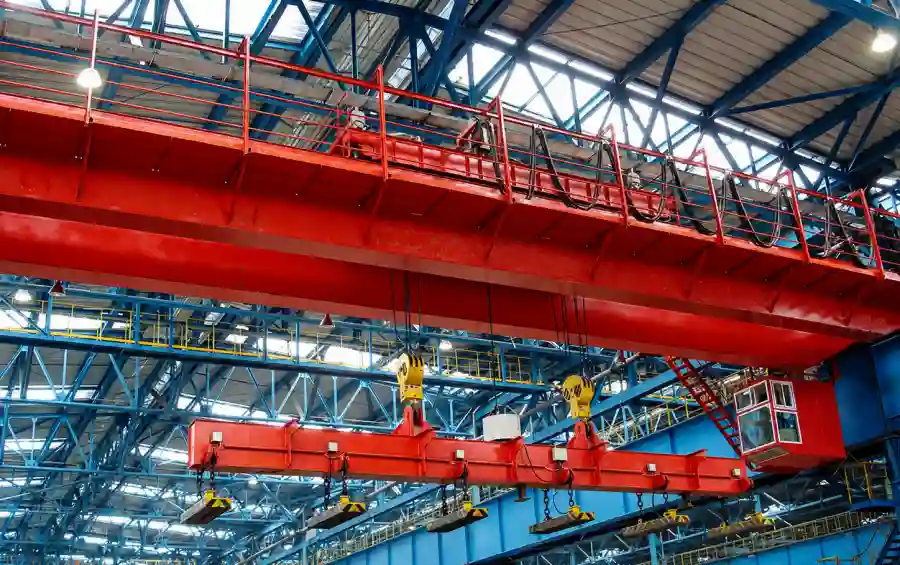
An electromagnetic bridge crane combines an overhead traveling crane structure with an electromagnetic lifting system, allowing operators to handle ferrous materials quickly and safely without using hooks, slings or manual attachment methods.
This type of crane is widely used in steel mills, metal processing plants, foundries, warehouses and heavy manufacturing facilities where magnetic materials are frequently moved between production areas.
What Is an Electromagnetic Bridge Crane?
An electromagnetic bridge crane is an overhead crane equipped with an electromagnetic lifting attachment instead of a traditional hook or grab bucket.
The crane usually consists of:
-bridge frame;
-traveling mechanism;
-crane trolley;
-lifting mechanism;
-electromagnetic system;
-electrical control system.
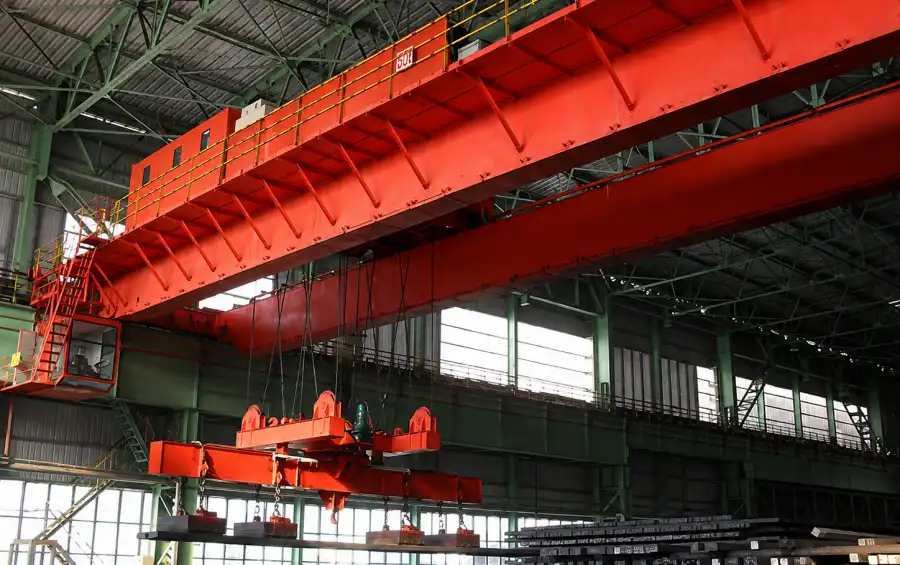
During operation, the electromagnetic device generates a magnetic field that attracts steel and other ferrous materials. After reaching the destination, the operator can release the load by cutting off the magnetic power supply.
Compared with conventional lifting equipment, this system allows faster material handling because no additional slings, chains or lifting fixtures are required.
How Does an Electromagnetic Crane Work?
The working principle is based on electromagnetic force.
When electrical current passes through the coil inside the lifting magnet, a magnetic field is created. This magnetic force attracts steel products and keeps them attached during transportation.
The basic operating process includes:
1.The crane moves the electromagnetic device above the material.
2.The operator activates the magnet.
3.The steel material is lifted and transported.
4.The magnet power is released at the unloading position.
5.The material is automatically separated from the lifting device.
This simple operation improves handling efficiency, especially in applications involving repeated loading and unloading cycles.
Main Features of Electromagnetic Bridge Crane
Fast Material Handling
One of the biggest advantages of an electromagnetic bridge crane is improved loading and unloading efficiency.
Steel plates, steel bars, billets and scrap metal can be lifted directly without preparing additional lifting tools. This reduces handling time and improves production flow.
Suitable for Heavy Steel Materials
Electromagnetic cranes are designed for applications where large amounts of ferrous materials must be transported.
Typical materials include:
-steel plates;
-steel pipes;
-billets;
-bars;
-sections;
-cast iron products;
-metal scrap.
Reduced Manual Operation
Because the electromagnetic system can pick up and release materials through electrical control, operators do not need to manually attach lifting accessories.
This reduces labor intensity and improves workplace efficiency.
Flexible Lifting Operation
The crane can move materials horizontally through the bridge and trolley movement while the electromagnetic device controls vertical lifting.
This provides wide coverage in large workshops and storage yards.
Where Are Electromagnetic Bridge Cranes Used?
Electromagnetic bridge cranes are mainly used in industries where steel handling is a continuous operation.
Steel Manufacturing Plants
Steel production facilities often handle large quantities of billets, slabs and steel products.
An electromagnetic crane can transport materials between furnaces, rolling mills, storage areas and processing stations.
Steel Warehouses
In steel storage yards, fast loading and unloading are important for improving logistics efficiency.
The electromagnetic system allows operators to move multiple steel products quickly without preparing individual lifting tools.
Metal Processing Workshops
Manufacturers producing steel structures, machinery parts and fabricated components often use electromagnetic cranes for moving raw materials and finished products.
Foundries and Casting Facilities
In foundries, cranes equipped with electromagnetic systems are commonly used for handling steel scrap and metal components.
Important Components of an Electromagnetic Bridge Crane
Bridge Structure
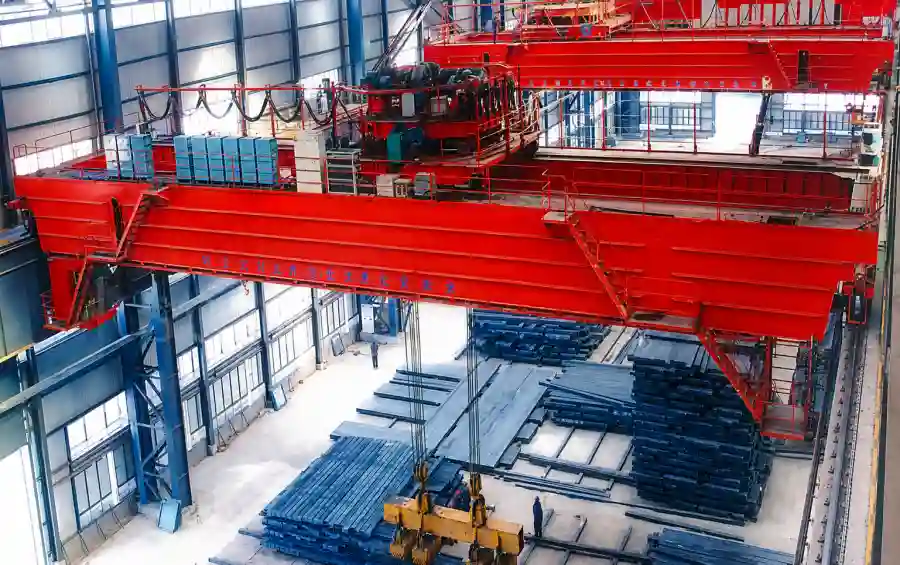
The bridge frame spans the workshop and provides the main traveling path for the crane trolley.
Its design depends on:
-lifting capacity;
-span length;
-working duty;
-workshop layout.
Crane Trolley
The trolley carries the lifting mechanism and electromagnetic equipment.
It moves along the bridge girder, allowing materials to be positioned accurately within the working area.
Electromagnetic Lifting System
The electromagnetic system is the key working component.
Selection depends on:
-material type;
-load shape;
-temperature conditions;
-lifting capacity;
-working frequency.
Different magnetic lifting solutions may be used for steel plates, bundles, billets or scrap materials.
Control System
The control system manages crane movement and electromagnetic operation.
Depending on customer requirements, control methods may include:
-pendant control;
-remote control;
-cabin operation.
For heavy-duty industrial environments, a crane cabin can provide operators with better visibility and protection.
How to Select the Right Electromagnetic Bridge Crane?
Choosing the correct crane requires more than confirming lifting capacity. The working environment and material characteristics must also be considered.
1. Lifting Capacity
Determine the maximum weight of materials that need to be handled.
The rated capacity should include the weight of the electromagnetic lifting device itself.
2. Material Type and Size
Different steel products require different magnetic solutions.
Important information includes:
-material shape;
-length;
-thickness;
-surface condition;
-temperature.
3. Working Duty
The crane design should match the operation frequency.
For example:
-occasional material movement requires a lighter-duty configuration;
-continuous steel production requires a heavy-duty design.
4. Working Environment
Consider:
-indoor or outdoor installation;
-dust conditions;
-temperature;
-humidity;
-corrosive environment.
Special environments may require customized electrical protection or crane design.
5. Power Supply
Provide:
-voltage;
-frequency;
-phase number.
The electromagnetic system and crane motors must match the local electrical standard.
Safety Considerations for Electromagnetic Bridge Crane Operation
Although electromagnetic cranes simplify material handling, proper operation procedures are still important.
Key safety points include:
-confirm the magnet has sufficient holding force before lifting;
-avoid lifting unsuitable materials;
-keep personnel away from suspended loads;
-inspect electromagnetic equipment regularly;
-check power supply and backup systems.
For critical applications, safety designs such as emergency power systems may be considered to reduce the risk of accidental load release during power interruption.
Frequently Asked Questions
What materials can an electromagnetic bridge crane lift?
It is mainly used for ferrous materials such as steel plates, billets, steel bars, cast iron products and scrap metal.
Can an electromagnetic crane lift stainless steel?
It depends on the type of stainless steel. Many stainless steel grades have limited magnetic properties, so the lifting capability should be evaluated before selection.
What is the difference between an electromagnetic crane and a hook crane?
A hook crane uses slings, hooks or lifting accessories to connect with the load. An electromagnetic crane uses magnetic force to directly attract ferrous materials, making repeated steel handling faster.
Can the electromagnetic system work during power failure?
Some applications require backup power systems to maintain magnetic holding force temporarily during power interruption. The specific design depends on safety requirements and operating conditions.
Is an electromagnetic bridge crane suitable for outdoor use?
Yes, but outdoor applications may require additional protection for electrical components, motors and structural parts depending on climate conditions.
A Reliable Choice for Steel Handling Applications
An electromagnetic bridge crane is designed for industries where fast, repeated and efficient movement of ferrous materials is essential.
By combining overhead crane movement with electromagnetic lifting technology, it provides a practical solution for steel plants, warehouses, foundries and heavy manufacturing facilities.
Selecting the correct configuration requires careful consideration of material characteristics, working conditions and production requirements.
Looking for an electromagnetic bridge crane for your application?
Send your required lifting capacity, material information, workshop layout and operating conditions. A suitable lifting solution can be designed according to your actual handling needs.