


 English
 Español
 Русский
 العربية
 Français
 Deutsch
 Português
 Tiếng Việt
 Thai
Thai
 Bahasa Indonesia
 Türkçe
 Italiano

In modern manufacturing plants, factories and industrial facilities, efficient material handling directly affects production efficiency and operational safety. An Industrial Overhead Crane is one of the most widely used lifting solutions for moving heavy materials, equipment and components inside workshops and production areas.
Unlike mobile lifting equipment, an overhead crane operates above the working area, allowing factories to maximize floor space while improving lifting efficiency. It is commonly used in steel plants, machinery manufacturing, automotive factories, warehouses, power plants and many other industrial environments.
With decades of experience in crane manufacturing, WEIHUA provides customized industrial overhead crane solutions designed according to different lifting capacities, working conditions and production requirements.
What Is an Industrial Overhead Crane?
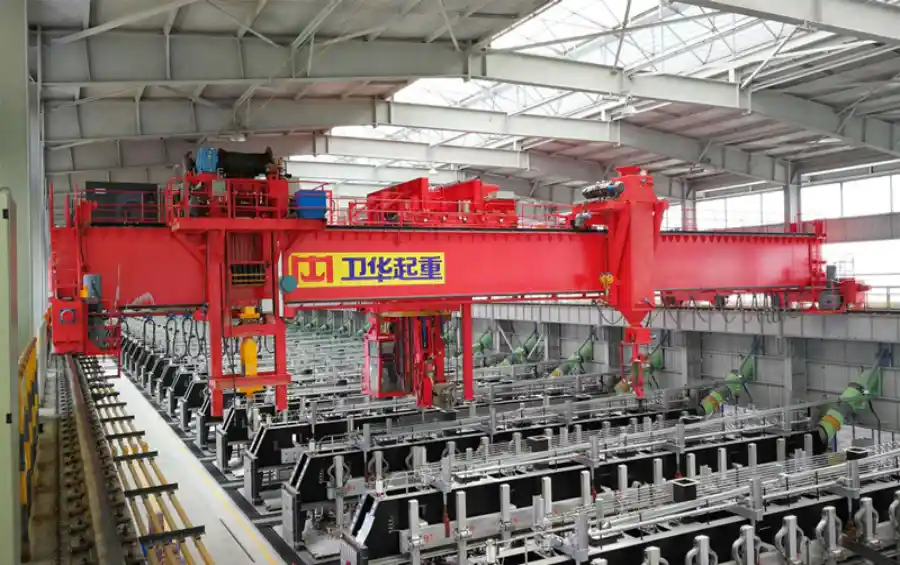
An industrial overhead crane is a bridge-type lifting system installed above the workshop floor. It usually consists of a bridge structure, end trucks, hoisting mechanism, trolley system, electrical control system and runway system.
The crane moves horizontally along the runway, while the trolley travels across the bridge to position the lifting device above the load.
-The main movements include:
-Lifting and lowering of heavy materials
-Bridge travelling along the workshop
-Trolley travelling across the crane span
-Precise positioning of loads during production operations
Because the crane operates overhead, it does not occupy valuable ground space, making it an efficient solution for factories with continuous material handling requirements.
Where Are Industrial Overhead Cranes Used?
Industrial overhead cranes are designed for applications where frequent and safe lifting operations are required.
Manufacturing Plants
In machinery factories and production workshops, overhead cranes help transport heavy components between processing stations, assembly areas and storage locations.
Typical applications include:
-Machine component handling
-Equipment installation
-Production line material transfer
-Heavy part positioning
Steel and Metal Industries
Steel plants require reliable lifting equipment for handling heavy loads under demanding conditions.
Overhead cranes are commonly used for:
-Steel plates
-Steel coils
-Metal structures
-Molten material handling (with special crane designs)
Automotive Manufacturing
Automotive factories use overhead cranes for moving molds, production equipment and large components during manufacturing and maintenance processes.
Warehouses and Logistics Centers
Industrial warehouses use overhead cranes to improve storage efficiency and reduce dependence on manual handling or forklifts.
Main Advantages of Industrial Overhead Cranes
Better Space Utilization
One of the biggest advantages of overhead cranes is that they use the upper space of a facility.
Since the crane travels above the production area, the factory floor remains available for:
-Production equipment
-Storage areas
-Workers and vehicles
This helps companies improve workshop layout and maximize available space.
High Lifting Efficiency
Industrial overhead cranes are designed for repeated lifting operations. Compared with manual handling or smaller lifting equipment, they provide:
-Higher lifting capacity
-Faster material transfer
-More accurate positioning
-Reduced labor requirements
For factories with continuous production processes, this can significantly improve overall efficiency.
Improved Safety During Heavy Material Handling
Moving heavy loads manually creates safety risks. Overhead cranes provide controlled lifting and transportation through dedicated mechanisms and safety systems.
Depending on application requirements, cranes can include:
-Overload protection
-Limit switches
-Emergency stop systems
-Remote control operation
-Cabin control systems
-Intelligent monitoring functions
Customized Design for Different Industrial Conditions
Industrial overhead cranes are not one-size-fits-all equipment. The correct crane configuration depends on the actual working environment.
Important factors include:
Lifting Capacity
The crane capacity should match the maximum weight of materials being handled.
Common industrial capacities range from several tons to hundreds of tons depending on the application.
Span and Runway Length
The crane span determines the working width of the workshop, while runway length affects the available travelling distance.
Working Duty Class
The working frequency and daily operating hours determine the required crane duty level.
A crane used for occasional maintenance lifting has different requirements from one operating continuously on a production line.
Control Method
Industrial overhead cranes can be equipped with:
-Pendant control
-Wireless remote control
-Operator cabin control
-Automated control systems
Industrial Overhead Crane Types
Different industries require different crane structures.
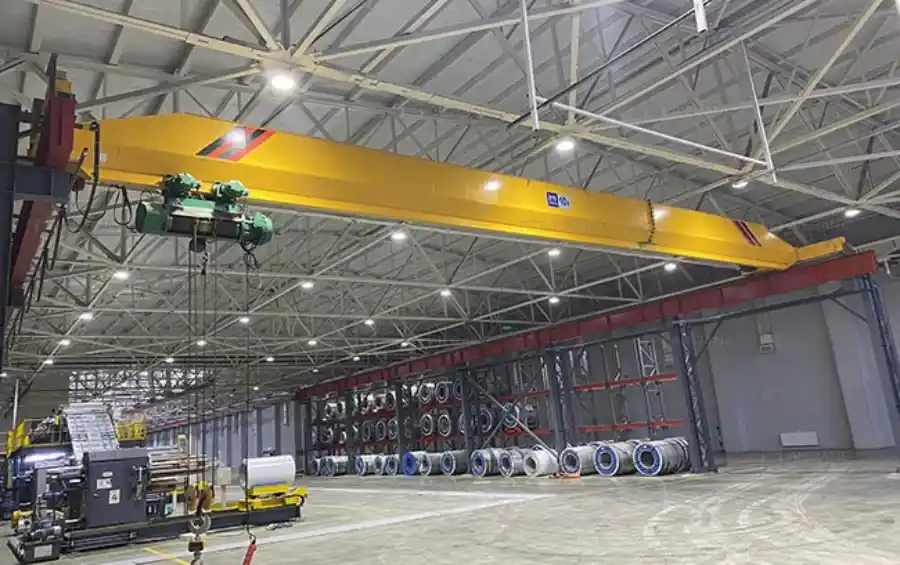
Single Girder Overhead Crane
Single girder cranes are suitable for light and medium-duty lifting applications.
Advantages:
-Compact structure
-Lower installation cost
-Easy maintenance
-Suitable for workshops with limited lifting requirements
Double Girder Overhead Crane
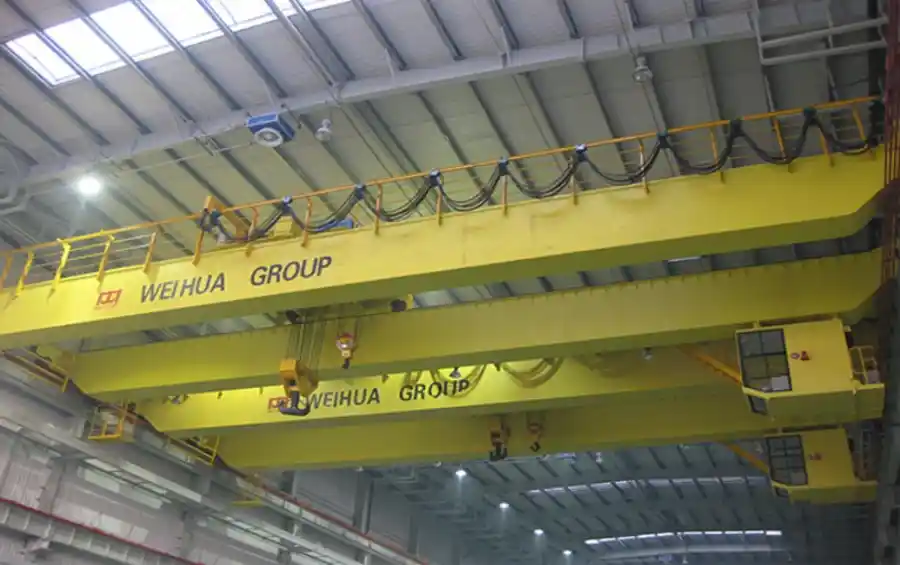
Double girder overhead cranes are designed for heavier loads and more demanding working conditions.
Advantages:
-Higher lifting capacity
-Greater stability
-Longer service life
-Suitable for heavy manufacturing industries
Typical applications include:
-Steel plants
-Shipbuilding
-Heavy machinery factories
-Large industrial workshops
How to Choose the Right Industrial Overhead Crane?
Before purchasing an overhead crane, customers should consider the following information:
1. What is the maximum lifting weight?
The crane capacity should be selected according to the heaviest load, including lifting accessories.
2. How often will the crane operate?
Daily working frequency determines the required duty classification and mechanical design.
3. What is the workshop layout?
Important information includes:
-Building width
-Runway length
-Available installation space
-Ceiling height
4. What materials need to be handled?
Different loads may require different lifting devices, such as:
-Hooks
-Magnets
-Clamps
-Special lifting attachments
5. Is automation required?
For modern smart factories, remote control and intelligent monitoring systems may improve efficiency and safety.
Why Choose a Professional Overhead Crane Manufacturer?
An industrial overhead crane is a long-term investment. Choosing a manufacturer with engineering experience is important because crane performance depends not only on lifting capacity but also on structural design, electrical systems and after-sales support.
A professional manufacturer can provide:
-Customized crane design
-Production according to international standards
-Factory testing before delivery
-Installation guidance
-Technical support
WEIHUA focuses on providing industrial lifting solutions for different industries, offering customized overhead crane systems according to customer requirements.
Frequently Asked Questions (FAQ)
1.What is an industrial overhead crane used for?
An industrial overhead crane is mainly used for lifting and transporting heavy materials inside factories, workshops, warehouses and industrial facilities.
2.What is the difference between a single girder and double girder overhead crane?
A single girder crane is generally used for lighter lifting applications, while a double girder crane provides higher capacity and better stability for heavy-duty industrial operations.
3.How much weight can an overhead crane lift?
The lifting capacity depends on the crane design. Industrial overhead cranes can be customized from light-duty applications to heavy-duty systems capable of lifting hundreds of tons.
4.Does an overhead crane save factory space?
Yes. Because the crane operates above the working area, it reduces the need for floor-based transportation equipment and helps improve workshop space utilization.
5.How long does an industrial overhead crane last?
With proper design, installation and maintenance, an industrial overhead crane can provide many years of reliable operation. Service life depends on working conditions, duty level and maintenance quality.
6.What information should I provide when requesting an overhead crane quotation?
Customers should provide:
-Required lifting capacity
-Crane span
-Lifting height
-Runway length
-Working frequency
-Material type
-Workshop drawings (if available)
These details allow engineers to recommend the most suitable crane solution.
Reliable Overhead Crane Solution for Industrial Applications
Industrial overhead cranes remain one of the most efficient solutions for heavy material handling in modern factories.
By combining high lifting capacity, flexible configuration and reliable operation, overhead cranes help industries improve productivity while maintaining safer working environments.
For factories, warehouses and industrial facilities looking for a customized lifting system, selecting the right crane design according to actual operating conditions is the key to achieving long-term performance.
