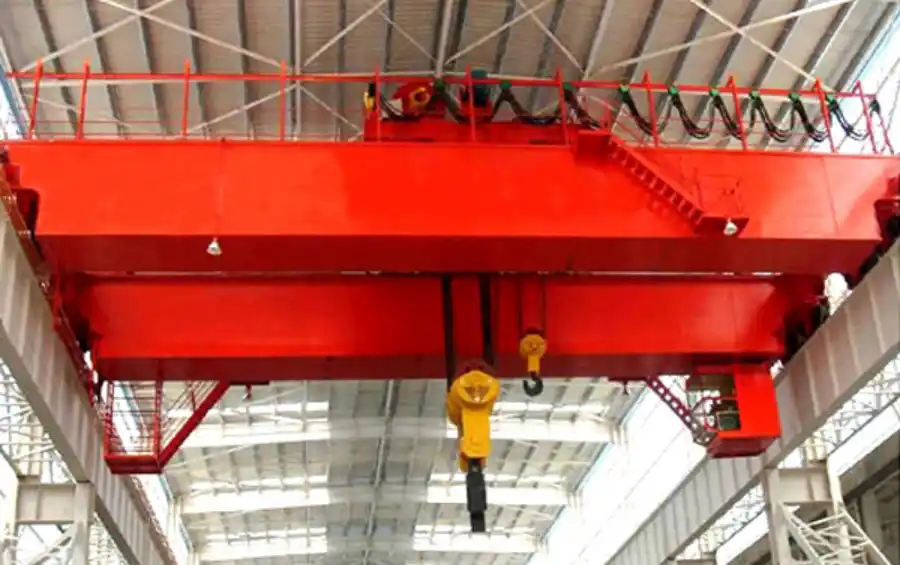
What Is an Insulating Overhead Crane?
An insulating overhead crane is a double-girder overhead crane equipped with multiple layers of electrical insulation at critical points in the lifting chain. The insulation breaks the conductive path between the lifted load (which may carry electrical current) and the crane structure, protecting both the equipment and the personnel on the ground.
The key difference from a standard overhead crane is not the lifting capacity or the span. It is the insulation system. On a Weihua insulating overhead crane, insulation is installed at three or more critical points:
-Between the hook and the pulley block
-At the connection between the hoisting mechanism and the trolley frame
-At the trolley frame and crane structure interface
At each insulation point, an epoxy-phenolic laminated glass-cloth insulating bushing is applied, with a voltage withstand rating of up to 35 kV or above. An integral insulating base plate and insulating bearing housings are additionally installed at the hoisting mechanism connection.
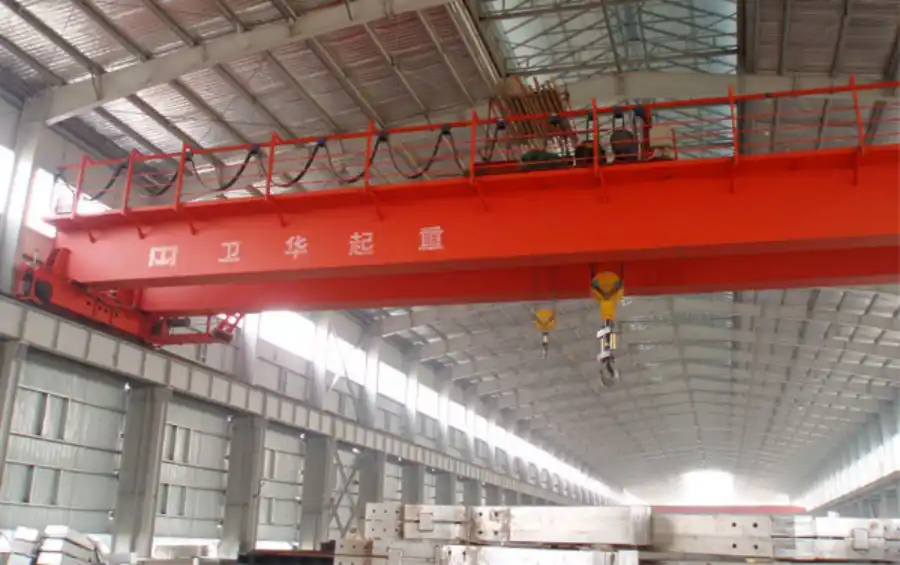
Where Do You Need an Insulating Overhead Crane?
Not every plant needs an insulating overhead crane. You need one if your lifting operations involve materials that carry or are exposed to electrical current. The most common scenarios include:
Electrolytic Aluminum Smelting
In aluminum electrolysis plants, the pots carry massive electrical current. When you lift anode assemblies, cathode blocks, or molten metal ladles, the load itself can be a conductor. Without insulation, current travels through the wire rope, through the crane girder, and into the building structure.
Electrolytic Copper and Other Non-Ferrous Metals
Copper electrowinning and electrorefining operations face the same challenge. The crane must lift materials from electrolytic cells where high-voltage DC current is present.
Chemical Electrolysis Plants
Chlor-alkali plants and other chemical electrolysis facilities use cranes to handle electrodes and materials that are part of an active electrical circuit.
Power Industry
In transformer and switchgear manufacturing facilities, cranes may lift components that are part of high-voltage test circuits or are themselves carrying residual charge.
If your plant does not involve any of these scenarios, a standard overhead crane is likely sufficient. But if it does, using a non-insulated crane is not a cost saving. It is a safety violation waiting to happen.
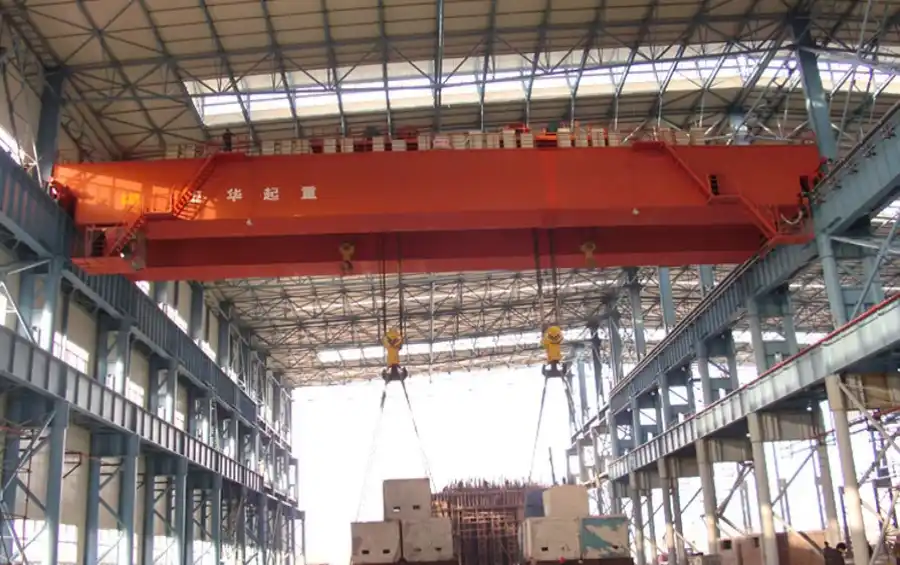
Key Specifications of Weihua Insulating Overhead Crane
The following parameters are based on the Weihua insulating overhead crane product line. Specific configurations can be customized based on your plant requirements.
Lifting Capacity: 5 t - 50 t (main hook); configurations include 5 t, 10 t, 16/3.2 t, 20/5 t, 32/5 t, 50/10 t (main/auxiliary)
Span: 10.5 m - 31.5 m
Lifting Height: 12 m - 18 m
Work Duty: A5 / A6 (heavy duty)
Main Lifting Speed: 5.9 - 14.5 m/min
Auxiliary Lifting Speed: 7.2 - 13.2 m/min
Crane Traveling Speed: 74.2 - 116.8 m/min
Trolley Traveling Speed: 27.4 - 78.3 m/min
Power Supply: 3 Phase 380V 50Hz (customizable to local requirements)
Track: 43 kg/m rail, QU70, QU80, or 90/100 square steel
Insulation Resistance: >= 1 MOhm at 20C - 25C, humidity <= 85%
Voltage Withstand:Up to 35 kV at insulation points
Why Weihua's Insulating Overhead Crane?
Multiple Layers of Insulation Protection
Three or more critical insulation points ensure that even if one insulation layer fails, the current path is still broken at other points. This redundant design is what separates a properly engineered insulating crane from one that simply has insulating bushings added as an afterthought.
Dual-Brake System
The main hoisting mechanism is equipped with dual brakes. In a high-voltage environment, a brake failure is not just a dropped load. It is a potential electrical catastrophe. Dual brakes ensure that if one brake fails, the secondary brake holds the load, giving operators time to clear the area.
Grounding Protection
In addition to insulation, the crane provides effective grounding to protect personnel on the ground from electric shock. Insulation and grounding work together: insulation prevents current from reaching the crane structure, while grounding provides a safe path for any residual current.
Heavy-Duty Design
The work duty rating of A5/A6 means this crane is built for the demanding environment of electrolytic smelting. High ambient temperatures, corrosive fumes, and continuous operation cycles are all part of the design considerations.
Certified and Compliant
Weihua insulating overhead cranes are manufactured in compliance with GB/T 3811 (Chinese national standard, based on ISO 4301), and can be supplied with CE certification for the European market. The insulation materials meet the relevant IEC standards for electrical insulation in industrial equipment.
How to Choose the Right Insulating Overhead Crane
1. Match the Insulation Level to Your Plant's Voltage
The most critical specification is the voltage withstand rating of the insulation system. Different electrolytic processes operate at different voltages. Aluminum smelting pots typically run at 4-5 V per cell but are connected in series, meaning the total voltage across a potline can reach 1,000 V or more. Make sure the insulation system's voltage withstand rating exceeds your plant's maximum working voltage with a comfortable safety margin.
2. Verify the Insulation Resistance Standard
At each insulated point, the insulation resistance should be no less than 1 MOhm under standard ambient conditions (20C - 25C, relative humidity <= 85%). Ask the supplier for the test protocol: how is the resistance measured, at how many points, and what documentation is provided? A reputable supplier will provide test certificates for each insulation point.
3. Consider Your Working Environment
Electrolytic smelting workshops are harsh environments. High temperature, corrosive gases, and high humidity. These factors degrade insulation materials over time. Ask about the insulation material's thermal rating and chemical resistance. Epoxy-phenolic laminated glass-cloth is a proven material for these conditions, but verify that it is rated for your specific ambient temperature range.
4. Do Not Overlook the Duty Class
Insulating overhead cranes in electrolytic plants often run on a near-continuous basis. If your crane will operate on multiple shifts, make sure the duty class (A5/A6 or higher) matches your actual usage frequency. Selecting a duty class that is too low for your working frequency will shorten the crane's lifespan and increase the risk of insulation degradation due to mechanical stress on the insulating components.
5. Plan for Insulation Maintenance and Testing
Insulation is not a fit-and-forget feature. Over time, thermal cycling, vibration, and chemical exposure can reduce insulation effectiveness. When choosing a crane, ask the supplier: What is the recommended testing interval? Do they provide a testing protocol? Are spare insulation kits available? A supplier that cannot answer these questions is not a supplier you should trust with a safety-critical crane.
6. TCO (Total Cost of Ownership)
As with any industrial crane, the purchase price is only part of the equation. In the case of insulating overhead cranes, the TCO calculation should include:
-Insulation testing and maintenance costs over the crane's life
-Spare insulation kits (recommend keeping one set on hand)
-Potential downtime cost if insulation fails and the crane must be taken out of service
-Energy efficiency of the crane's electrical systems
A slightly higher purchase price for a crane with a well-engineered insulation system and readily available spare parts will almost always be cheaper in the long run than a cheaper crane that requires frequent insulation repairs.
Frequently Asked Questions
Q: How do I know if my plant needs an insulating overhead crane instead of a standard one?
If your lifting operations involve materials that are part of an active electrical circuit, such as lifting anode assemblies from electrolytic cells, handling materials in electrowinning or electrorefining operations, or lifting components in high-voltage test environments, you need an insulating overhead crane. If your lifting is purely mechanical (no electrical current on the load), a standard overhead crane is sufficient. When in doubt, describe your working process to our technical team and we will advise you.
Q: What insulation resistance value should I look for, and how often should it be tested?
Each insulation point should have a resistance of no less than 1 MOhm (megohm) measured at 20C - 25C and relative humidity <= 85%. We recommend testing the insulation resistance at least every 6 months under normal operating conditions, and immediately after any incident that could have damaged the insulation (such as a dropped load, a short circuit event, or exposure to abnormal temperatures). Weihua provides a testing protocol and can supply spare insulation kits for on-site replacement.
Q: Can the insulating overhead crane be used in environments with corrosive gases or chemicals?
The standard insulating overhead crane is designed for electrolytic smelting environments, which do involve some corrosive fumes. However, if your environment has concentrated corrosive gases (such as chlorine gas in chlor-alkali plants), you should inform us during the inquiry stage.
We can upgrade the crane with additional anti-corrosion treatment on structural components, specialized coatings on exposed surfaces, and sealed electrical enclosures. For extreme chemical environments, we also offer the multi-function crane for electrolytic aluminum, which combines insulation with enhanced chemical resistance.