


 English
 Español
 Русский
 العربية
 Français
 Deutsch
 Português
 Tiếng Việt
 Thai
Thai
 Bahasa Indonesia
 Türkçe
 Italiano

1. Introduction
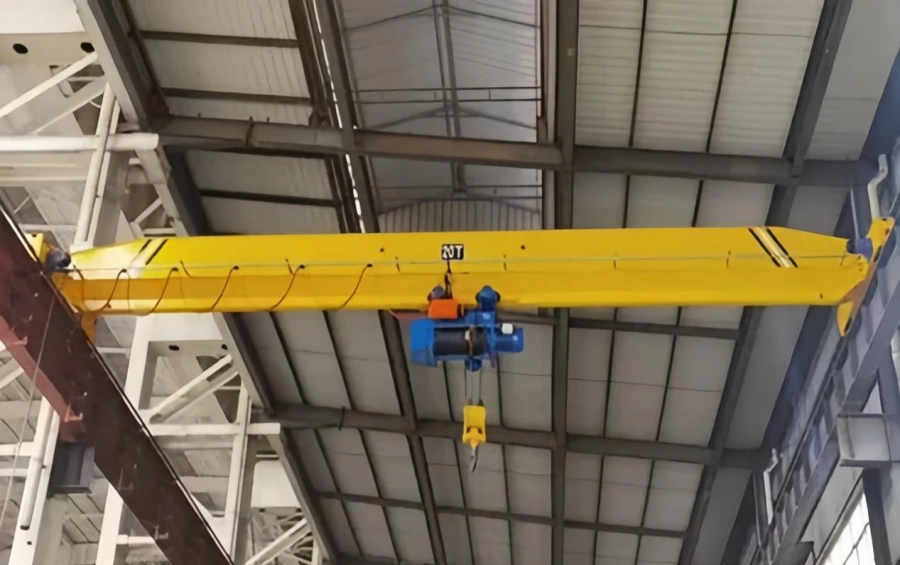
Light duty overhead crane is a popular single-girder lifting equipment designed for low-to-medium frequency light load handling, widely known as LD type overhead crane. It mainly matches CD/MD electric wire rope hoists, with standard load capacity from 0.5t to 20t and working class A3-A4.
This crane features lightweight body, compact layout, low wheel pressure and affordable price. It is widely installed in machinery assembly workshops, mold processing plants, warehouses, auto repair shops and small production lines for transporting finished parts, raw materials and equipment maintenance. Compared with heavy-duty double girder cranes, it lowers requirements on factory beam bearing capacity and greatly saves plant construction and equipment investment costs.
2. Main Classification & Structure
Common Types of Light Duty Overhead Cranes
Standard LD Single Girder Overhead Crane The most mainstream model, stable running, easy installation, suitable for most standard workshops with sufficient headroom.
LDP Low Headroom Light Duty Crane Special optimized hoist layout, maximizes effective lifting height, perfect for factories with limited ceiling heightAlibaba.co....
Underslung Light Duty Overhead Crane Hangs under roof beams, no heavy support columns required, ideal for small workshops with narrow space.
Basic Composition
-Box welded main girder: High-strength steel, light self-weight and strong rigidity
-End carriages & traveling wheels: Low noise, stable operation
-Electric hoist (wire rope/chain type): Core lifting unit, optional single/double speed
-Control system: Pendent push button or wireless remote control
-Complete safety protection system
3. Core Advantages & Key Features
-Economic investment: Simple structure, lower manufacturing, shipping and maintenance cost
-Space-saving compact design: Light body, low wheel load, no need for reinforced factory beams
-Flexible operation: Smooth traveling and lifting, optional wireless remote control for safer operation
-Multiple safety protections: Overload limit, travel limit, emergency stop, buffer and anti-collision device
-Low maintenance cost: Modular parts, easy disassembly and inspection, less downtime
-Wide customization: Span, lifting height, voltage, control mode and paint color can be adjusted as demand
4. Typical Application Scenarios
Machinery Assembly Workshop
Used for moving castings, gears, small machining parts during assembly. Precise slow-speed lifting avoids workpiece collision.
Mold & Hardware Processing Factory
Suitable for loading/unloading injection molds, stamping molds, metal hardware semi-finished products.
Warehouse & Small Logistics Yard
Handles boxes, bundled steel pipes, small raw materials to replace manual forklift and reduce labor intensity.
Auto Repair & Equipment Maintenance
Convenient for dismounting engines, large spare parts and workshop equipment overhaul.
5.Frequently Asked Questions
Q1: What’s the difference between light duty and heavy duty overhead crane?
A1: Light duty cranes are for intermittent, low-frequency lifting below 20t, A3-A4 working class, low cost. Heavy-duty double girder cranes support long-time continuous operation, higher load and A5-A7 heavy duty grade.
Q2: Can I install it in a low-ceiling workshop?
A2: Yes, we supply LDP low headroom light duty model to improve effective lifting height for limited ceiling space.
Q3: Do you provide CE certification for export?
A3: All our light duty overhead cranes pass CE standard, complete technical documents and export package available.
6.Author Information
This article is written by Nora, industrial overhead crane specialist at Antop (Henan) Heavy Industry Co., Ltd. We supply full series overhead cranes, gantry cranes and customized lifting equipment for global small and medium factory buyers.
