



An Aluminum Workshop Overhead Crane is designed for lifting and handling materials inside aluminum processing and fabrication workshops.
In these facilities, the crane itself is not necessarily made of aluminum. Its job is to support the production process around aluminum billets, plates, profiles, coils, finished components, molds, tools, and other workshop materials.
Compared with a general-purpose warehouse crane, an overhead crane used in an aluminum workshop needs to match the actual production flow, lifting frequency, material shape, available workshop space, and handling method.
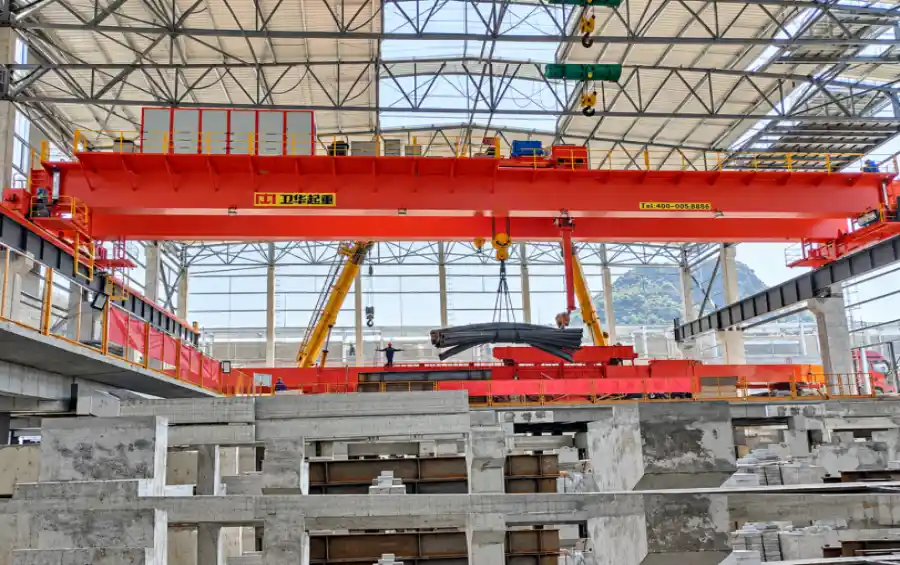
Where Is an Overhead Crane Used in an Aluminum Workshop?
Aluminum processing usually involves several production stages, and material handling is required between many of them.
An overhead crane can be used for tasks such as:
-loading and unloading aluminum raw materials;
-moving aluminum billets or ingots within the workshop;
-handling aluminum plates and sheets;
-transferring profiles and fabricated components;
-lifting molds, dies, tools, or production equipment;
-feeding materials to processing machines;
-moving finished products to storage or packing areas;
-supporting maintenance and equipment installation.
The required crane configuration depends heavily on the material.
Long aluminum profiles, for example, may need a different lifting arrangement from compact machine parts or tooling.
Large flat aluminum sheets may require suitable lifting attachments to keep the load stable during movement.
For this reason, the crane should be selected together with the lifting method rather than by rated capacity alone.
Start With the Material You Need to Lift
For an aluminum workshop, load shape is often just as important as load weight.
Before choosing the crane, identify the main materials being handled.
For example, if you mainly move aluminum profiles, you should provide their maximum length, bundle size, and weight.
If you handle aluminum plates, provide the maximum plate dimensions and weight.
If the crane is mainly used for molds, dies, or maintenance components, explain the heaviest individual item and how frequently it is lifted.
This information helps determine whether a standard hook system is enough or whether the crane needs additional lifting equipment such as a lifting beam, spreader, clamp, or other suitable attachment.
A crane rated for the correct tonnage can still be inconvenient if the lifting arrangement does not match the shape of the aluminum product.
Single-Girder or Double-Girder Crane?
Both single-girder and double-girder overhead cranes can be used in aluminum workshops.
The suitable choice depends on capacity, span, lifting height, operating frequency, and workshop layout.
A single-girder overhead crane is often considered when the required capacity and working conditions are relatively moderate. It can provide a practical lifting solution while keeping the crane structure comparatively simple.
A double-girder overhead crane may be more appropriate when the workshop requires higher capacity, a wider span, more demanding operating conditions, or a specific lifting arrangement.
The decision should not be based on the idea that one type is always better.
For many buyers, a single-girder system may fully meet production needs. In other projects, the operating conditions make a double-girder design more suitable.
The correct selection starts with the actual production task.
Capacity: Do Not Choose It Only by the Average Load
Crane capacity should be based on the maximum lifting requirement, not the weight of the materials normally handled.
For example, your workshop may usually lift 2-ton aluminum products but occasionally need to move a heavier mold or machine component.
That occasional heavy load must be considered during crane selection.
The weight of lifting accessories should also be included where applicable.
If a lifting beam, spreader, or other attachment is used below the hook, its weight affects the total lifted load.
When requesting a quotation, it is useful to provide both:
normal working load and maximum lifting load.
This gives the crane supplier a clearer picture of the real application.
Span and Workshop Layout
The crane span is normally related to the distance between the crane runway rails.
However, simply providing the total workshop width is not always enough.
Columns, production lines, furnaces, machines, storage racks, doors, and maintenance areas may affect the crane arrangement.
For an existing aluminum workshop, a simple layout drawing is extremely useful.
It should ideally show:
-workshop width and length;
-column positions;
-available installation height;
-required crane travel length;
-main machines or production lines;
-material loading and unloading positions;
-required lifting coverage.
If no formal drawing is available, workshop photos and a hand sketch with dimensions can still provide useful information.
Lifting Height Is Especially Important in Existing Workshops
In many retrofit projects, available headroom is limited.
The customer may need to lift the material to a certain height, but the roof structure, crane runway, pipes, lighting, or ventilation equipment can restrict the available space.
For this reason, provide the required hook lifting height, not just the total building height.
The supplier can then evaluate how much installation space is available above the hook.
This is particularly important when the crane needs to work above production machines or when the workshop has a relatively low roof.
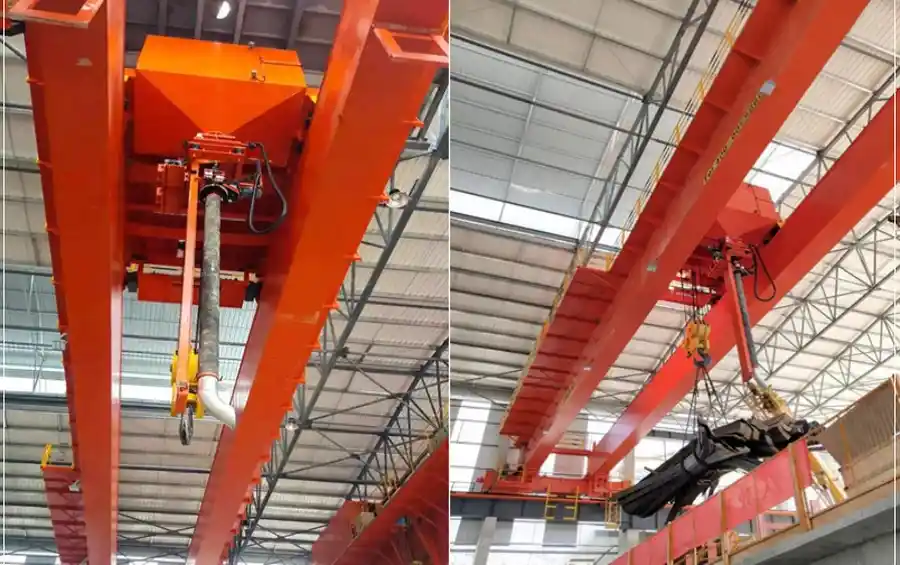
How Often Will the Crane Work?
An aluminum workshop crane used occasionally for maintenance has very different operating requirements from a crane serving continuous production.
If the crane is used throughout every shift, this should be stated clearly during the inquiry stage.
Useful information includes:
-approximate lifts per hour;
-operating hours per day;
-number of shifts;
-average load;
-maximum load;
-typical travel distance.
This operating information helps determine the required crane and hoist configuration.
A crane selected only by tonnage may not be suitable if the actual working frequency is much higher than expected.
What Information Should You Send for a Quotation?
If you are looking for an Aluminum Workshop Overhead Crane, the fastest way to receive a meaningful quotation is to provide the actual working conditions.
Send the following information where possible:
1.Required crane capacity
2.Maximum load weight
3.Type of aluminum product being lifted
4.Maximum load dimensions or material length
5.Crane span
6.Required lifting height
7.Crane travel length
8.Working hours or lifting frequency
9.Workshop power supply
10.Indoor working conditions
11.Existing runway beam information, if available
12.Workshop drawings or photos
13.Required lifting attachments, if already known
You can also describe the production process in one or two sentences.
For example:
“We need the crane to move aluminum profile bundles from the storage area to two processing machines.”
That short description can be more useful than simply saying, “We need a 5-ton overhead crane.”
How to Choose the Right Crane for Your Aluminum Workshop?
A practical selection process starts with four areas:
Load, layout, operating frequency, and material flow.
First, determine the maximum weight and dimensions of the aluminum products or equipment being lifted.
Second, confirm the workshop span, lifting height, and required travel area.
Third, estimate how frequently the crane will operate.
Finally, explain how materials move through the workshop.
With this information, the supplier can evaluate the suitable crane structure, lifting system, travel arrangement, and control method.
The goal is not to install the largest crane possible.
The goal is to install a crane that fits the actual aluminum production process.
Need a More Accurate Crane Proposal?
For an aluminum processing workshop, there is no single standard crane configuration that fits every customer.
A workshop handling long extrusion profiles has different requirements from one handling plates, molds, machine components, or finished aluminum products.
When requesting a proposal, send your capacity, span, lifting height, travel length, material dimensions, and workshop layout.
With these basic details, it becomes much easier to determine what type of overhead crane is suitable for your aluminum workshop and prepare a more accurate quotation.
