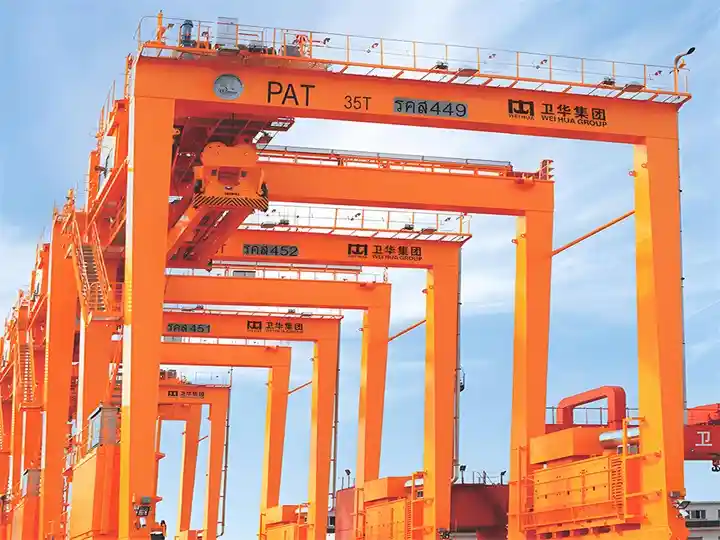
Definition of RTG
Rubber tyred container gantry crane adopted with the door-shaped structure, and that structure is so called gantry crane. But here, we would like to call it a rubber tyred container gantry crane. This machine is also matched with four or more rubber wheels to travel and load or unload containers at a shipyard or the goods railway station. You can also call this gantry crane an RTG, which is the short form of rubber-tyred gantry crane. This crane mainly lifts containers to load and unload from or into ships or trains.
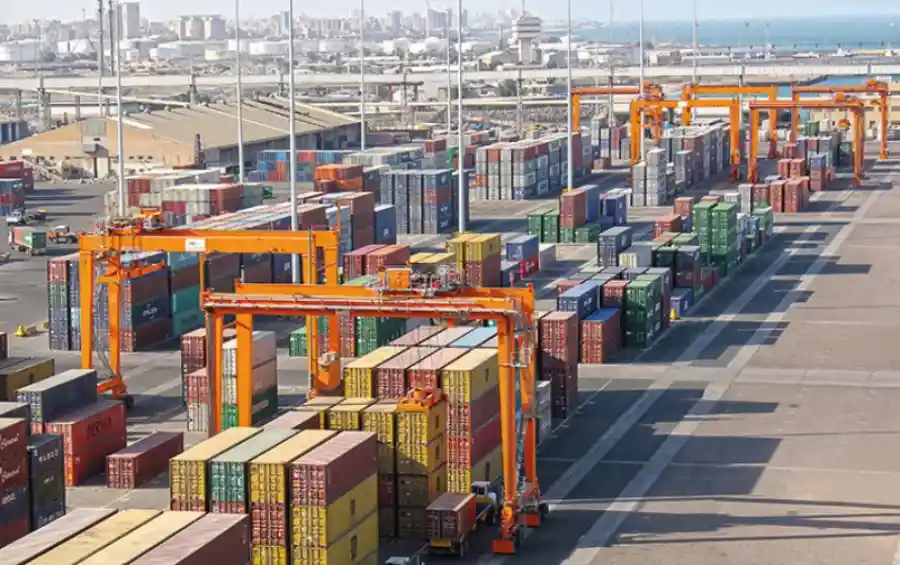
How does a RTG crane work?
The RTG crane is always utilized at shipyards, train goods stations, ports, and other places that need the RTG crane to work. RTG typically has a flexible structure due to its rubber wheel and gantry crane shapes. So, RTG can move very flexibly here and there or where the crane can move to. This feature helped the crane lift containers effectively.
Also, the crane has two power sources: one is electricity, and the other is diesel. You can choose one of them according to your lifting situations, like lifting capacity. It is better for you to choose the electricity model combined with diesel. This is the most cost-effective way for most customers to select.
Typically, the RTG can contain 5-6 floors of containers and 6-8 lanes of containers, which will determine your lifting height and span on a RTG machine. Also, you should leave a space for security in order to avoid collisions at your job site.
RTG vs RMG
We will talk about the differences and common points between RTG and RMG; most people could get confused when talking about them
1.RMG can only be traveled across the rails, but RTG do not need to travel alongside the rails. As we talked about above, RTG can travel flexibly and have no limitations that must be operated alongside rails.
2.RTG has a lower max lifting capacity than RMG. Typically, RTG has 70 tons lifting capacity at most, and RMG has 80 max lifting capacity. That does not mean that RTG has lower lifting capacity than RMG in all ranges. It is not accurate to say something like that.
3.They are all container lifting equipment. That is the most significant common point.
4.Also, these two types of gantry crane can also be applied at train goods stations and shipyards, ports.
Application scenarios
1.Container Yards
Container yards include ports and shipyards, or even rail freight terminals. These are the most common application scenarios.
2.Inland Ports & Logistics Hubs
This actually has the common points with the container yards. For example, rail freight terminals are always located inland. Such as the China-Europe rail project has many inland ports. They will transform the goods or materials into the European market.
3.Temporary Storage & Expansion Projects
Such as metro expansion projects; workers need this type of RTG crane to lift materials at their job site. No limitations on the rails.
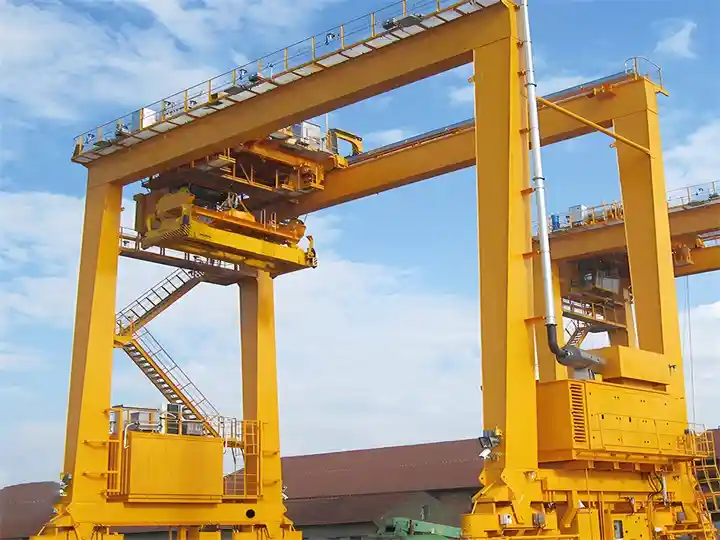
Tips on how to select the right RTG
1.Consider the containers’ dimensions, layers, and lanes
These factors can affect your RTG lifting height, span, and lifting capacity. You can calculate these specifications regarding job site situations. If you do not know how to calculate them accurately, send us your site situations, container layers, and lanes. Our technical team can help you resolve this problem in 24 hours.
2.Containers throughput and working efficiency
Containers will contain so many materials or products. So, you have to know your container throughput and working efficiency; those will determine the rubber-tyred gantry crane duty class and load spectrum.
3.Environmental protection regulations and carbon emission limitations
In many countries and regions, there are many certificates and regulations around the world, and there are also some limitations on carbon emissions. This is an essential work for all RTG crane operators and buyers to consider, particularly before any purchase decision making. Certificates like CE, TUV, CMAA, and other important regulations have a strong control on environmental protection and carbon emission limitations.
4.Total cost of ownership (TCO)
When you decide to buy or to consider this RTG machine, TCO (Total cost of ownership) is a crucial factor you should know about. That means you should not just consider the price, you have to know your maintenance costs, downtime losses. You pay more on buying it, but you will pay less in the future work. Quality is the other critical factor you have to take into account.
If you do not know how to calculate the right specs, or even do not know how to choose the right RTG, contact Steve sales representative, and download WEIHUA brochure. We will reply to you in 24 hours.
FAQs
1.Which is more suitable for my terminal: RTG or RMG?
Choose RTG if: You need flexibility to move between different yard blocks, have limited initial budget for civil works (no rails needed), or operate in a multi-purpose terminal.
Choose RMG if: You prioritize high efficiency, automation, and lower long-term operating costs. RMGs are ideal for fixed, high-density container yards where you want to maximize throughput and reduce labor costs.
Recommendation: If you plan to automate in the future, RMG is the better path. If you need versatility now, RTG is the way to go.
2.How often do RTG crane tires need to be replaced?
Professional Answer (Sales Perspective):
Typically, RTG tires last between 3 to 5 years, depending on several factors:
Workload: High-intensity operations (24/7) will wear them out faster.
Surface Condition: Smooth concrete extends tire life; rough asphalt shortens it.
Maintenance: Proper inflation and regular rotation are key.
Note: Our RTGs are designed with steering systems that minimize uneven tire wear, helping you extend tire life and reduce maintenance costs.
3.How should the charging infrastructure for electric RTGs be configured?
Professional Answer (Sales Perspective):
There are two main configurations for Electric RTGs (e-RTGs):
Cable Reel System: The crane connects to a power cable reel when stationary. This is simple but limits movement slightly.
Battery Hybrid System (Most Popular): The RTG runs on batteries for mobility and charges automatically via short-contact rails or plug-in stations during idle times or at specific charging points.
Advantage: This hybrid approach ensures zero emissions during operation while maintaining full flexibility. We can design the charging layout based on your yard’s workflow to ensure continuous operation without downtime.