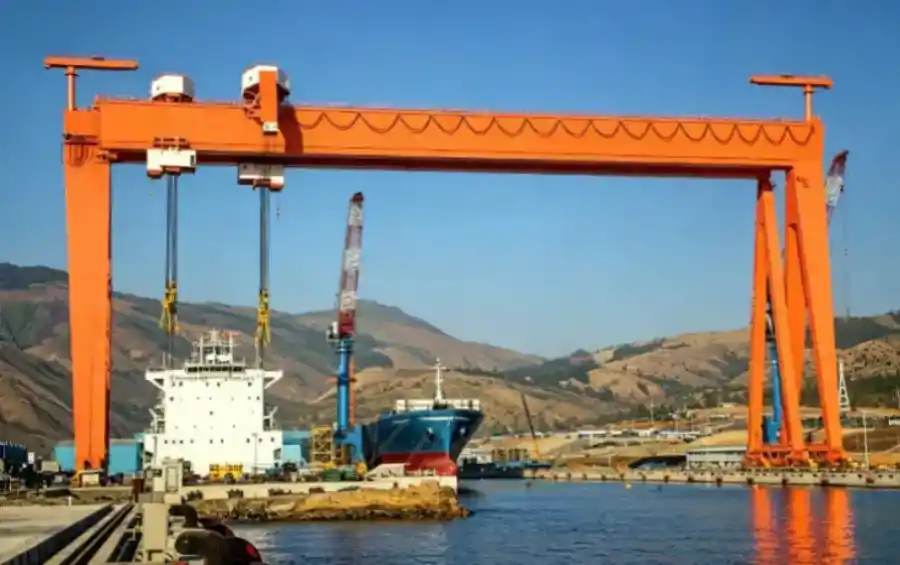
Shipbuilding is one of the most demanding industries in terms of lifting capacity, precision, and operational safety. During ship construction, large and heavy components such as hull blocks, steel plates, engines, and ship sections need to be transported and assembled efficiently.
A Shipbuilding Gantry Crane is specially designed for shipyard applications, providing reliable heavy lifting solutions for ship assembly, block handling, and large-scale fabrication processes. With high lifting capacity, large working spans, and excellent stability, it has become an essential piece of equipment in modern shipyards.
What Is a Shipbuilding Gantry Crane?
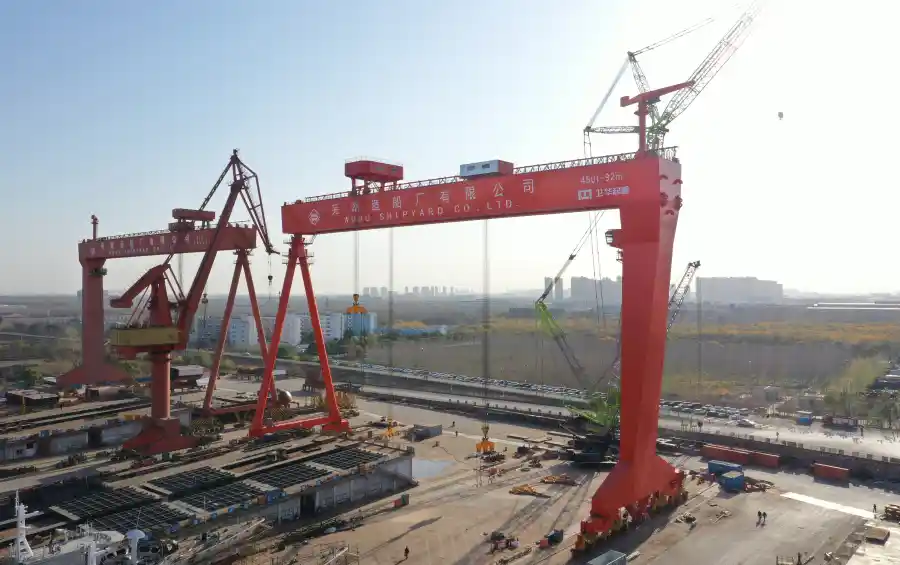
A Shipbuilding Gantry Crane is a large outdoor gantry crane used mainly in shipyards for lifting and moving heavy ship components. Unlike standard gantry cranes, shipbuilding gantry cranes are designed for extremely large loads, long spans, and harsh marine environments.
The crane usually consists of:
-Main girder structure
-Rigid supporting legs
-Traveling mechanism
-Lifting trolley system
-Electrical control system
-Safety protection devices
The crane runs on rails installed along the shipyard area, allowing operators to move heavy sections between different production zones.
Main Applications of Shipbuilding Gantry Crane
Shipbuilding gantry cranes are widely used throughout the ship construction process.
Ship Block Assembly
During shipbuilding, large prefabricated blocks must be accurately positioned and assembled. A gantry crane provides the lifting capacity and precise movement required for block installation.
Hull Fabrication
Large steel structures, hull sections, and heavy components can be transported efficiently, improving production speed and reducing manual handling risks.
Ship Repair and Maintenance
Shipyard gantry cranes are also used for lifting equipment, engines, and other heavy components during vessel repair projects.
Offshore Engineering Projects
Large gantry cranes are often applied in offshore equipment manufacturing, including platforms, marine structures, and heavy steel fabrication.
Key Features of Shipbuilding Gantry Crane
High Lifting Capacity
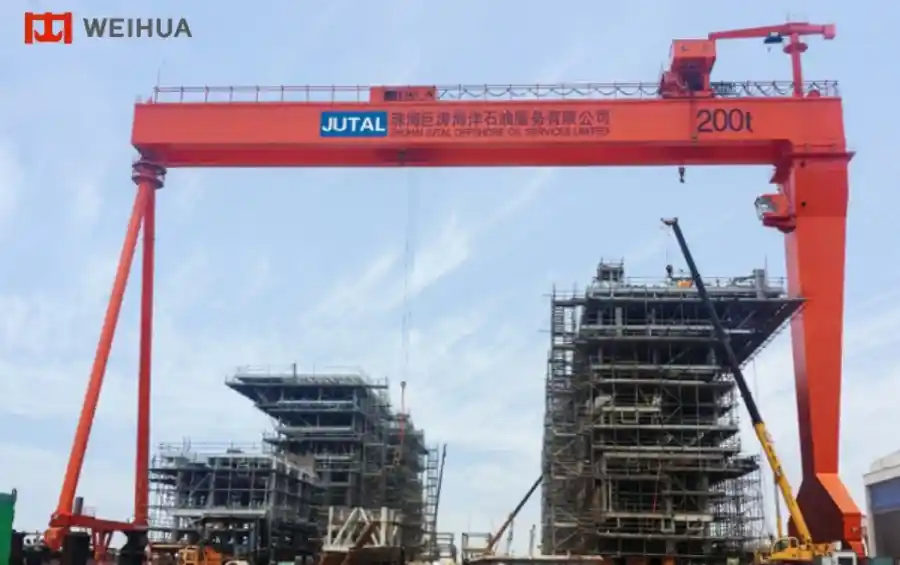
Shipbuilding operations require cranes capable of handling extremely heavy loads. Depending on project requirements, shipyard gantry cranes can be designed with lifting capacities ranging from hundreds to thousands of tons.
Large Span Design
Shipyards require wide working areas to cover large vessels. The gantry crane structure can be customized according to the shipyard layout, including span length, lifting height, and rail distance.
Precise Positioning
During ship block assembly, accurate positioning is critical. Advanced control systems help operators achieve smooth movement and precise load placement.
Reliable Operation in Harsh Environments
Shipbuilding gantry cranes are designed to operate in outdoor environments with exposure to wind, humidity, salt air, and changing weather conditions.
Shipbuilding Gantry Crane Specifications
The specifications depend on the shipyard requirements and lifting tasks.
Lifting Capacity: 50 tons - 2000 tons or customized
Span: 30 m - 180 m or customized
Lifting Height: Customized according to vessel size
Working Class: A5-A7
Operation Method: Cabin control / Remote control
Application: Shipyard, marine engineering, offshore fabrication
How to Choose the Right Shipbuilding Gantry Crane?
Selecting a suitable shipbuilding gantry crane requires careful consideration of several factors.
First, determine the maximum lifting weight of ship sections and components. The crane capacity should meet current production requirements while allowing future expansion.
Second, evaluate the shipyard layout, including rail distance, working area, vessel size, and available installation space.
Third, consider the working environment. Coastal shipyards may require additional protection against corrosion, wind loads, and high humidity conditions.
Finally, the crane should be designed according to operating frequency and safety requirements to ensure long-term reliability.
Benefits of Using a Shipbuilding Gantry Crane
A properly designed shipbuilding gantry crane can bring significant advantages:
-Faster ship assembly process
-Improved lifting safety
-Reduced labor requirements
-Higher production efficiency
-Better utilization of shipyard space
-Reliable long-term operation
For large shipyards, investing in a suitable gantry crane system can significantly improve overall manufacturing capability.
Shipbuilding Gantry Crane vs General Gantry Crane
Although both are gantry-type lifting equipment, shipbuilding gantry cranes have higher requirements.
A standard gantry crane is usually used for container handling, warehouses, or general industrial lifting. A shipbuilding gantry crane, however, is designed for:
-Much heavier loads
-Larger spans
-Higher lifting heights
-More precise positioning
-Continuous outdoor operation
Therefore, shipyard projects require specialized crane designs rather than standard lifting equipment.
Frequently Asked Questions About Shipbuilding Gantry Crane
1. What is a shipbuilding gantry crane used for?
A shipbuilding gantry crane is mainly used for lifting and transporting ship blocks, hull sections, steel structures, and heavy marine equipment during ship construction and repair.
2. What is the maximum lifting capacity of a shipyard gantry crane?
The lifting capacity depends on the shipyard requirements. Large shipbuilding gantry cranes can be designed for hundreds or even thousands of tons.
3. How long does a shipbuilding gantry crane last?
With proper design, installation, and maintenance, a high-quality shipbuilding gantry crane can provide reliable service for many years.
4. Can a shipbuilding gantry crane be customized?
Yes. The crane can be customized according to vessel size, shipyard layout, lifting capacity, working conditions, and control requirements.
5. What information is needed for a crane quotation?
To select the right solution, customers usually need to provide:
-Maximum lifting capacity
-Ship size or production requirements
-Crane span
-Lifting height
-Working environment
-Operation frequency
-Power supply requirements