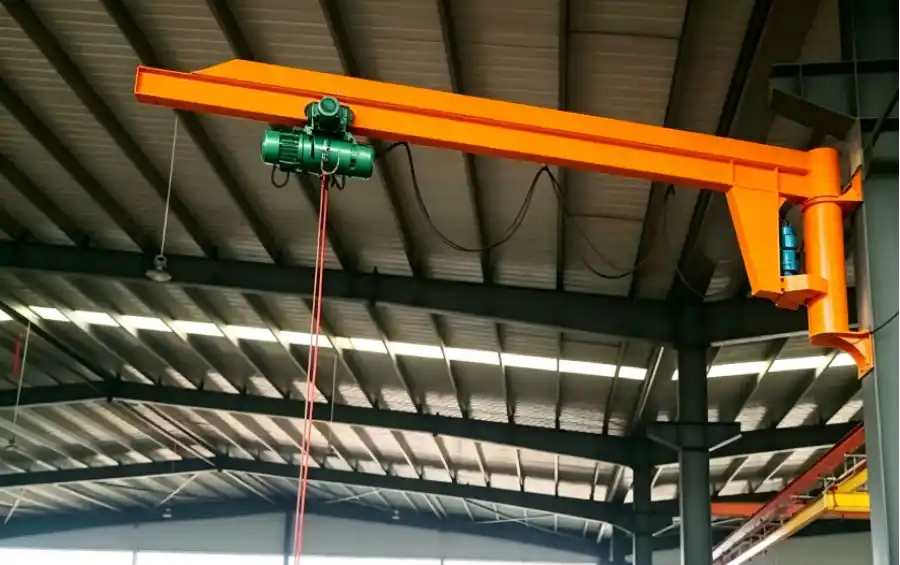
When lifting tasks are concentrated around a workstation, machine tool, assembly area, or production line, installing a large overhead crane is not always necessary. A wall mounted jib crane provides a more compact solution for frequent lifting and short-distance material handling.
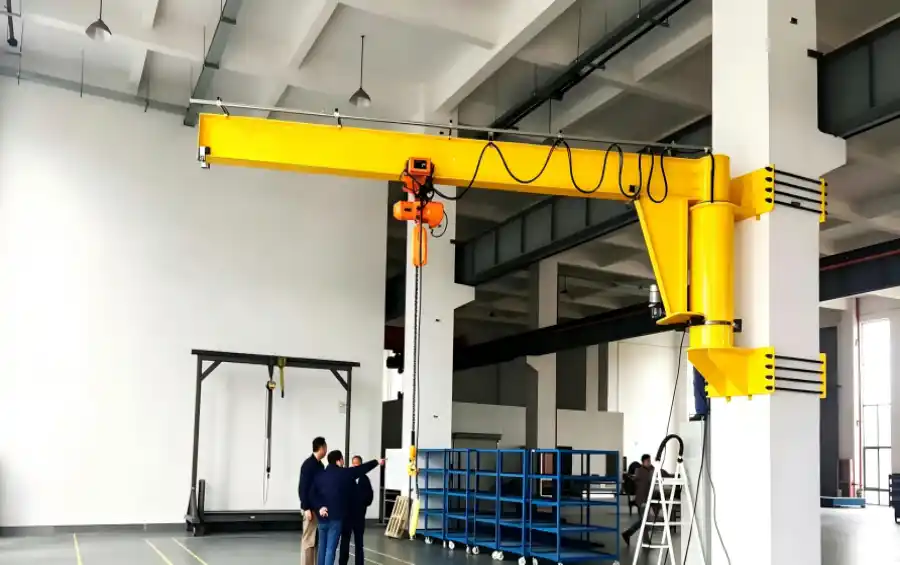
Mounted directly to a building column, reinforced wall, or suitable steel supporting structure, the crane uses existing workshop space rather than requiring a separate floor-mounted mast. This makes it particularly useful where floor space must remain clear for machines, operators, forklifts, or production flow.
What Is a Wall Mounted Jib Crane?
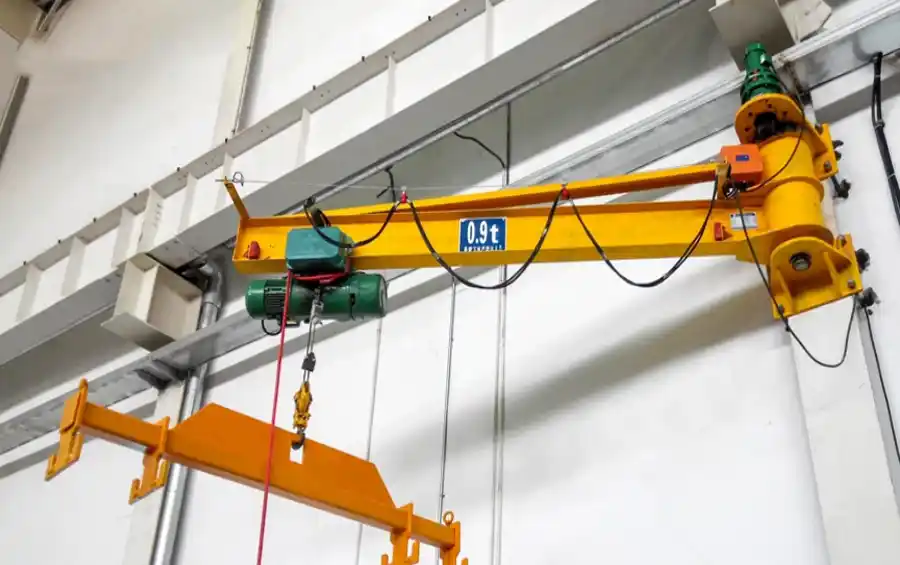
A wall mounted jib crane is a localized lifting system consisting mainly of a supporting bracket, horizontal jib arm, slewing mechanism, hoist and electrical control system.
The mounting brackets are fixed to a suitable wall, concrete column or structural steel column. The jib arm rotates around the mounting point, while the electric hoist travels along the arm to lift and position loads within the crane's working area. Depending on the operating requirements, slewing can be manual or electrically driven.
Unlike a free-standing jib crane, this configuration normally does not require a separate mast or floor foundation. As a result, valuable workshop floor area can remain available for production equipment and material movement.
Why Use a Wall Mounted Jib Crane?
The main advantage of this crane is not simply its compact size. It is the ability to create an independent lifting station exactly where material handling is required.
Better Use of Workshop Space
Because the crane is attached to an existing supporting structure, it does not occupy the floor area required by a pillar-type jib crane.
This is useful in workshops with:
-closely arranged production machines;
-narrow aisles;
-limited foundation space;
-several independent workstations;
-frequent forklift traffic.
Efficient Short-Distance Handling
Wall mounted jib cranes are particularly suitable for repeated lifting within a defined working radius.
Instead of moving materials manually or waiting for a larger workshop crane, operators can use the jib crane directly at the workstation. Typical operations include loading workpieces into machines, positioning components during assembly and transferring materials between adjacent production stages.
Flexible Load Positioning
The combination of jib rotation, hoist travel and vertical lifting gives the operator three basic directions of movement.
This makes it easier to position a load close to a machine, fixture, assembly table or storage point without installing a complete runway system.
Main Components of a Wall Mounted Jib Crane
Although the design is relatively simple, each part directly affects operating performance.
Wall or Column Mounting Brackets
The upper and lower brackets transfer crane loads to the building structure.
Before installation, the supporting wall or column must be checked to confirm that it can withstand the vertical load, horizontal load and overturning moment generated during crane operation.
This structural verification is one of the most important steps when selecting a wall mounted jib crane.
Jib Arm
The horizontal arm provides the working radius of the crane and supports the hoist trolley.
Its length should be selected according to the actual workstation layout rather than simply choosing the longest possible boom. A properly sized arm should cover the required lifting area without interfering with surrounding equipment, building columns or other cranes.
Slewing Mechanism
The jib arm rotates around its mounting axis.
Manual rotation is often sufficient for lighter loads and frequent workstation handling. Electric slewing can be considered where loads are heavier, the arm is longer or more controlled movement is required.
Electric Hoist
The hoist performs the actual lifting operation and normally travels along the jib arm.
Depending on the capacity, operating frequency and required lifting characteristics, either an electric chain hoist or a wire rope electric hoist can be used.
Electrical and Control System
A pendant control is commonly used for local operation. Depending on project requirements, wireless remote control and other control configurations can also be considered.
Where Are Wall Mounted Jib Cranes Used?
The crane is most effective when lifting operations are concentrated within a relatively small working area.
Machining Workshops
A jib crane can be installed beside CNC machines, lathes, milling machines and machining centers.
Operators can use it to load raw workpieces, remove finished components and position tooling without depending on a larger overhead handling system.
Assembly Lines
Wall mounted jib cranes can support component positioning during mechanical, automotive and equipment assembly.
Several cranes can also be arranged along a production line, allowing each workstation to have its own lifting area.
Warehouses
In warehouses, the crane can be used for loading, unloading, sorting and transferring components where the handling area remains relatively fixed.
Maintenance Areas
Maintenance workshops frequently need to remove motors, pumps, gearboxes and machine components.
A localized jib crane provides lifting coverage around the maintenance station while keeping the surrounding floor accessible.
Official product information also lists workshops, warehouses and production lines among the typical application environments for this type of crane.
How to Select the Right Wall Mounted Jib Crane
For an accurate quotation and technical proposal, several basic parameters should be confirmed first.
1. Lifting Capacity
Specify the maximum weight of the load to be lifted.
The selected crane capacity should account for the actual load and any lifting attachment, spreader, fixture or tooling used with it.
2. Working Radius
The working radius determines how far the crane arm needs to reach from the mounting point.
A workshop layout or simple drawing can help identify the required coverage more accurately.
3. Lifting Height
Measure the required vertical distance between the operating floor and the highest hook position.
Building height, jib elevation and hoist headroom should all be considered.
4. Slewing Range
The available rotation angle depends on the crane structure and surrounding building conditions.
For example, one current wall-mounted jib configuration is specified with a 180° slewing angle. However, the final slewing arrangement should be selected according to the actual project rather than assuming one standard value for every installation.
5. Supporting Structure
Provide information about the wall, concrete column or steel column where the crane will be installed.
For steel structures, column dimensions and drawings are particularly useful. For existing buildings, structural verification may be necessary before installation.
6. Power Supply
Voltage, frequency and phase should be specified according to the destination country and factory electrical system.
7. Operating Conditions
Inform the supplier about:
-operating hours per day;
-estimated lifting cycles;
-indoor or outdoor installation;
-ambient temperature;
-dust, humidity or corrosive conditions;
-special safety requirements.
These details help determine the appropriate hoist, motor, electrical equipment and working duty.
Frequently Asked Questions
1.What is the main advantage of a wall mounted jib crane?
Its main advantage is efficient use of space. The crane is attached to an existing supporting structure, so it normally does not require an independent floor-mounted mast. This helps keep production and traffic areas clear.
2.Can a wall mounted jib crane be installed on any wall?
No. The supporting structure must be capable of carrying the crane load and the forces generated during lifting and slewing. Structural verification should be completed before installation.
3.Can the jib rotate 360 degrees?
A typical wall-mounted configuration has a restricted rotation range because the arm is installed next to a wall or building column. One available configuration, for example, uses 180° slewing. If full rotation is required, a free-standing column jib crane is generally a more appropriate configuration.
4.Should I choose a chain hoist or wire rope hoist?
It depends on capacity, lifting height, operating frequency, required speed and available headroom. Chain hoists are often selected for compact workstation lifting, while wire rope hoists may be preferable for other capacity and duty requirements.
5.Can the jib rotation be motorized?
Yes. Depending on the design and operating requirements, the jib arm can use either manual or electric slewing.