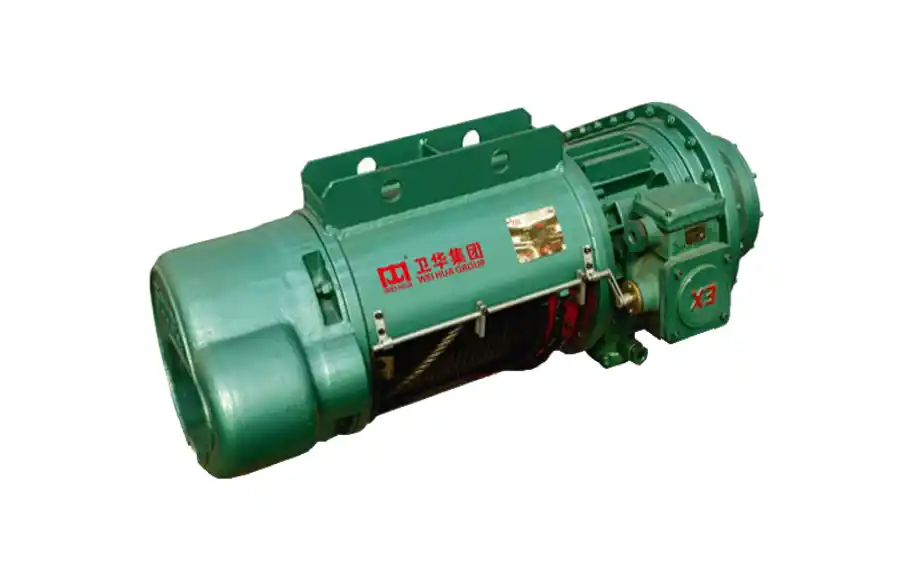
What Is an Explosion-proof Wire Rope Electric Hoist?
An explosion-proof wire rope electric hoist is a specialized lifting device designed to operate safely in environments where flammable gases, vapors, or combustible dust may be present. Unlike a standard wire rope hoist, every electrical and mechanical component is engineered to prevent sparks, arcs, or excessive surface temperatures from igniting the surrounding atmosphere.
In the Weihua product lineup, the HB series explosion-proof wire rope electric hoist is the dedicated model for hazardous area lifting. It shares the same modular structure and drum-based wire rope system as the standard CD/MD and WHL series hoists, but adds flameproof enclosures, sealed electrical components, and non-sparking materials throughout. The hoist can be mounted on a single girder overhead crane, a double girder bridge crane, or a single girder gantry crane, depending on your site layout and lifting requirements.
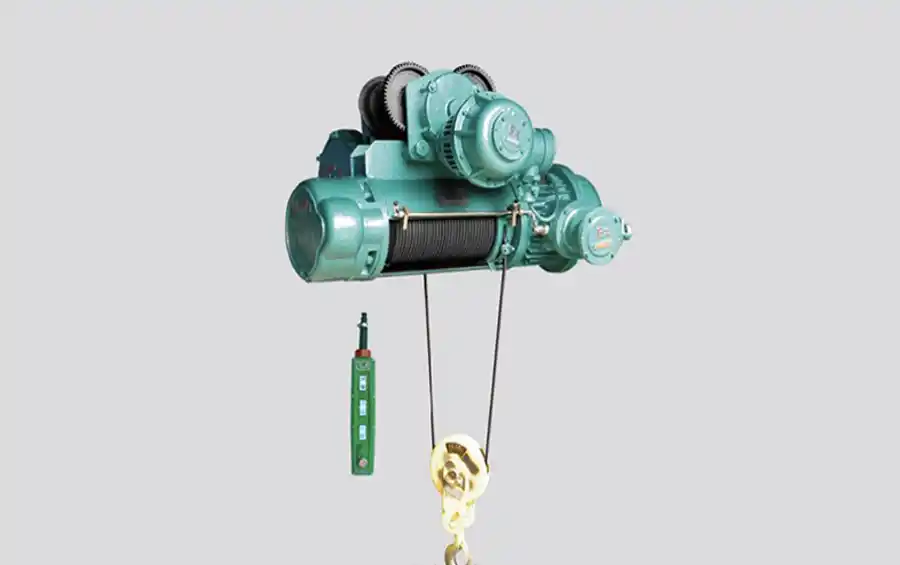
Where Are Explosion-proof Wire Rope Electric Hoists Used?
These hoists are critical for industries where a single spark could trigger catastrophic consequences. Common application scenarios include:
-Oil & Gas Refineries and Platforms: Hydrocarbon-rich atmospheres require ExdIICT4-rated equipment. Hoists here handle valve assemblies, pipe sections, and maintenance loads where flammable gases are continuously present.
-Chemical and Petrochemical Plants: From raw material handling to finished product movement, these facilities operate in atmospheres classified as Zone 1 and Zone 2 under ATEX/IECEx standards. Corrosion-resistant coatings and sealed electrical systems are non-negotiable.
-Coal Mining and Processing: Coal dust is highly combustible. Explosion-proof hoists with sealed enclosures and non-sparking contact surfaces safely transport bulk materials while preventing dust ignition.
-Paint and Coating Workshops: Volatile solvents create explosive atmospheres. Non-sparking hooks, stainless steel components, and spark-resistant rope guides reduce ignition risks during lifting operations.
-Grain and Powder Processing Facilities: Grain dust explosions are a well-documented hazard. These hoists feature dust-tight seals and sealed electrical housings to operate safely in silos and processing lines.
-Pharmaceutical Manufacturing: Fine chemical powders and solvent vapors require explosion-proof lifting equipment that complies with GMP and ATEX directives simultaneously.
Key Specifications
Before you request a quotation, you need to confirm the following parameters. These are based on the Weihua HB series explosion-proof wire rope electric hoist and the WHL series platform:
Lifting Capacity: 0.5 t – 80 t
Lifting Height: 6 – 30 m (customizable beyond standard range)
Lifting Speed: 5/0.8 m/min (standard dual speed); variable frequency drive (VFD) available for stepless speed control
Duty Class: M3 – M7 (ISO 4301), corresponding to A3 – A7 under GB/T 3811
Explosion-proof Mark: ExdIIBT4 (for IIB gas groups: propane, ethylene) or ExdIICT4 (for IIC gas groups: hydrogen, acetylene)
Wire Rope: 2160 grade high-tensile steel wire rope, international brand maintenance-free design
Hook: High-strength T-class forged hook with safety latch
Brake: Electromagnetic disc brake with automatic clearance compensation, maintenance-free, rated for 1 million braking cycles
Motor Power: 30% lower energy consumption compared to traditional electric hoists of the same capacity
Noise Level: Below 70 dB
Control Method: Pendant control, remote control, or cabin control (all with explosion-proof certification)
Applicable Standards: ISO, GB, FEM, DIN, BS; ATEX and IECEx certifications available on request
Voltage: 380V/50Hz, 400V/50Hz, 460V/60Hz, or customized to local requirements
What Makes a Wire Rope Electric Hoist "Explosion-proof"?
Flameproof Motor Enclosures
The lifting motor and traveling motor are housed in flameproof enclosures (Exd type) that can withstand an internal explosion without igniting the surrounding atmosphere. The enclosure is designed to contain the explosion pressure and cool the escaping gases below the ignition temperature of the ambient gas mixture.
Non-Sparking Mechanical Components
Critical contact surfaces use non-sparking materials such as beryllium bronze, stainless steel, or aluminum bronze. The hook, rope guide, and wheel groups are selected to eliminate friction sparks during normal operation and in the event of accidental contact.
Sealed Electrical System
All switches, contactors, limit switches, and control panels are sealed in flameproof or increased-safety housings with IP66 protection. Cable glands use explosion-proof threading, and all junction boxes are bolted with precise gap tolerances to prevent flame transmission.
Temperature Control
The surface temperature of any component exposed to the hazardous atmosphere is limited to below the auto-ignition temperature of the target gas group. For T4 rating, this means no surface exceeds 135°C, ensuring safe operation even in high-ambient-temperature environments.
Overload and Limit Protection
Dual limit switches and overload sensors prevent mechanical failures that could generate sparks or structural damage. The overload protector automatically cuts power when the load exceeds rated capacity, while the upper and lower limit switches prevent rope over-winding or over-lowering.
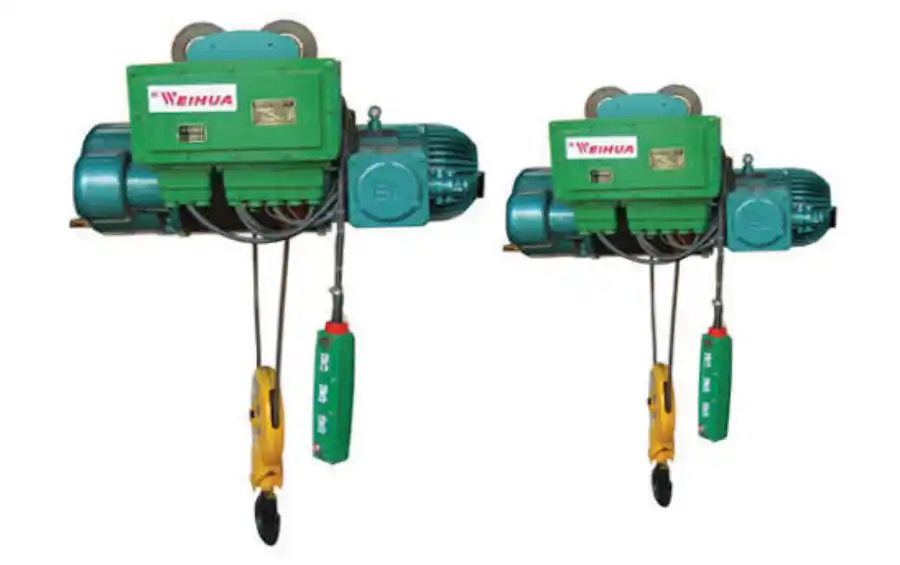
How to Choose the Right Explosion-proof Wire Rope Electric Hoist
Step 1: Identify Your Hazard Zone Classification
This is the most critical step. You need to know the gas group and zone classification of your facility before selecting any explosion-proof equipment:
-Zone 0 / Zone 20: Gas or dust present continuously or for long periods. Requires the highest protection level. Only ExdIICT4-rated equipment with intrinsically safe circuits is acceptable.
-Zone 1 / Zone 21: Gas or dust likely during normal operation. Standard ExdIIBT4 or ExdIICT4 explosion-proof equipment is required.
-Zone 2 / Zone 22: Gas or dust unlikely but possible. Enhanced safety (Exe) or non-sparking (ExnA) equipment may be sufficient, but we recommend full Exd protection for hoisting applications.
If you are not sure which zone your facility falls under, consult your safety officer or ask us. We can help you determine the correct protection level based on your site conditions.
Step 2: Match Lifting Capacity to Real Loads
If your typical load is 5 tons, do not spec a 5-ton hoist. Go for 8 or 10 tons. This accounts for dynamic loads, future growth, and extends the equipment lifespan. Also, always leave a safety margin between your actual load and the rated capacity—it is safer and reduces mechanical stress on the hoist.
Step 3: Select the Right Duty Class
Duty class determines how long and how often the hoist can operate safely. If you choose the wrong duty class, the hoist will be damaged prematurely, which can lead to accidents. You can calculate the required duty class based on your working hours, load spectrum, and lifting frequency. If you need help with the calculation, contact us and our engineers will assist you.
Step 4: Verify Full Machine Certification
Some suppliers offer explosion-proof accessories on standard hoists and call them explosion-proof. For true hazardous area compliance, insist on full machine certification—every component, including the motor, brake, control panel, limit switches, and even the cable glands, must be certified. Ask for the complete technical documentation and the explosion-proof certificate before placing an order.
Step 5: Consider the Total Cost of Ownership (TCO)
A cheaper hoist with partial compliance may cost far more in downtime, failed inspections, or safety incidents. Factor in maintenance accessibility, spare parts availability, and the cost of re-certification if any component is replaced. When you calculate TCO, include equipment purchase price, installation and commissioning, annual maintenance and spare parts, and downtime cost during crane failure. A Weihua explosion-proof hoist may have a slightly higher upfront cost, but it pays off through lower maintenance and fewer breakdowns over its 15-20 year service life.
Frequently Asked Questions
Q: Can I install an explosion-proof wire rope electric hoist on a single girder gantry crane?
A: Yes. The explosion-proof wire rope electric hoist can be installed on a single girder gantry crane for outdoor hazardous material handling. Weihua manufactures explosion-proof single girder gantry cranes that pair the HB series hoist with a gantry frame designed for Zone 1 and Zone 2 environments. When you use the hoist outdoors, you should also add a rain cover for the electrical components and install wind locks and rail clamps on the gantry crane to ensure safe operation in windy conditions.
Q: What is the maximum lifting capacity of a single girder gantry crane equipped with an explosion-proof hoist?
A: A single girder gantry crane typically supports lifting capacities from 1 ton to 20 tons. When equipped with an explosion-proof wire rope electric hoist, the standard range is 2 tons to 16 tons, depending on the duty class and span. For loads above 20 tons, we generally recommend switching to a double girder gantry crane to ensure better structural stability and safety. If your site has specific requirements, we can customize the capacity, span, and lifting height to match your needs.