


 English
 Español
 Русский
 العربية
 Français
 Deutsch
 Português
 Tiếng Việt
 Thai
Thai
 Bahasa Indonesia
 Türkçe
 Italiano

1.What Is a Single Girder Overhead Crane?
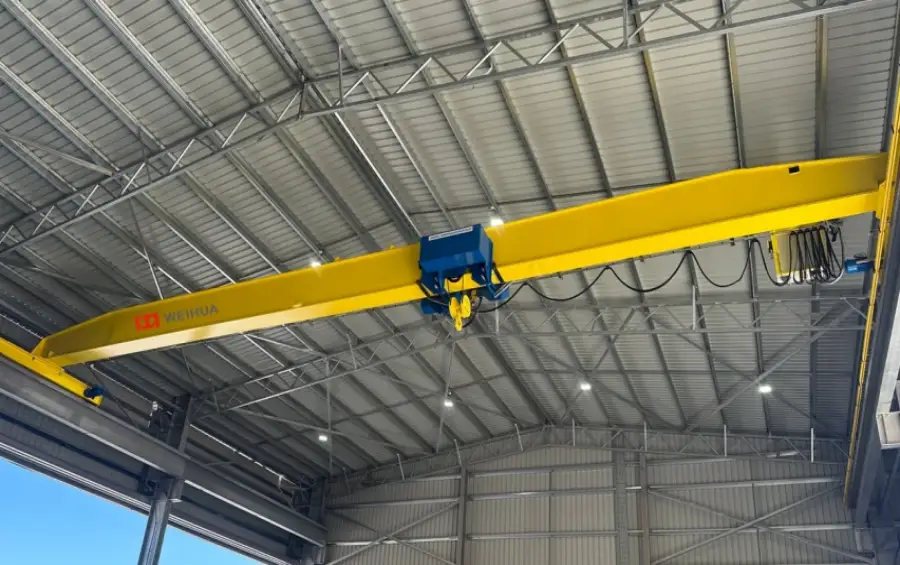
Single girder overhead cranes are widely used lifting equipment for factories, workshops, warehouses, and other industrial applications. Designed with a single main girder structure, they provide a reliable and economical solution for daily material handling, combining efficient operation, easy maintenance, and flexible installation.
With advanced manufacturing technology and extensive experience in crane production, Weihua single girder overhead cranes can be customized according to different working conditions. The crane configuration can be designed based on lifting capacity, span, lifting height, working duty, and application requirements to ensure safe and efficient material handling.
Suitable for general manufacturing, machinery processing, assembly lines, warehouses, and maintenance workshops, Weihua single girder overhead cranes provide stable performance and long-term reliability for various industrial lifting needs.
2.How Does a Single Girder Overhead Crane Work?
A single girder overhead crane works by using a bridge structure, an electric hoist, and a runway system to lift and move materials within a defined working area. The crane travels along the runway rails installed on the building structure, allowing operators to transport loads safely and efficiently across the workshop.
The main working process includes lifting, horizontal movement, and crane travel. These three movements allow operators to transport materials efficiently across the workshop and improve handling efficiency.The electric hoist raises or lowers the load, the trolley moves the hoist along the main girder, and the bridge travels along the runway system to cover the entire working area.
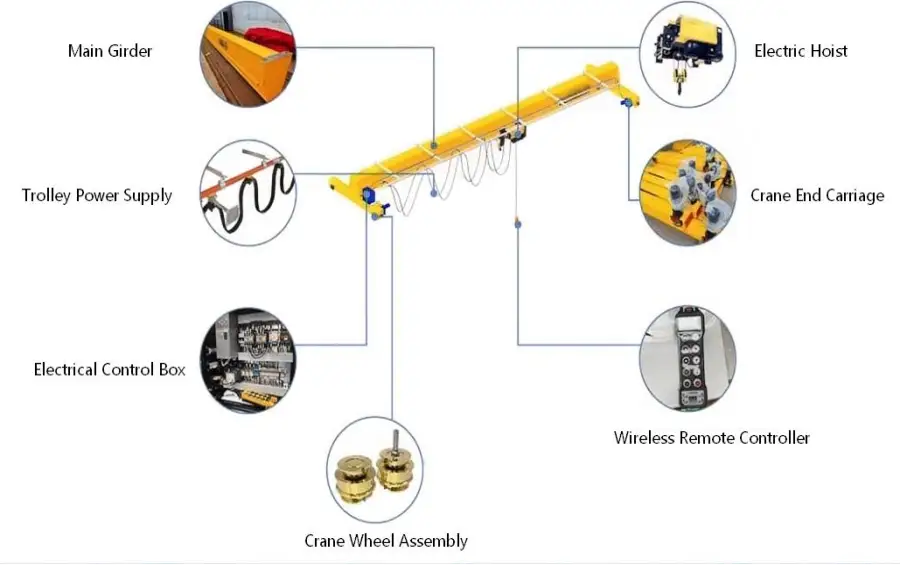
A typical single girder overhead crane consists of the following key components:
Main Girder:The single main girder is the primary load-bearing structure of the crane. It supports the hoist and trolley while transferring the load to the end trucks.
Electric Hoist and Trolley:The electric hoist is responsible for lifting and lowering materials. The trolley allows the hoist to move horizontally along the girder, providing precise load positioning.
End Trucks and Runway System:The end trucks are installed at both ends of the bridge girder and equipped with wheels that allow the crane to travel along the runway rails. This movement enables the crane to cover a large working area inside the factory.
Control System:The crane can be operated through pendant control, remote control, or other control systems depending on the application requirements, providing safe and convenient operation.
With the cooperation of these components, a single girder overhead crane provides a safe and efficient material handling solution for factories, workshops, warehouses, and other industrial environments.
3. Advantages of Single Girder Overhead Crane
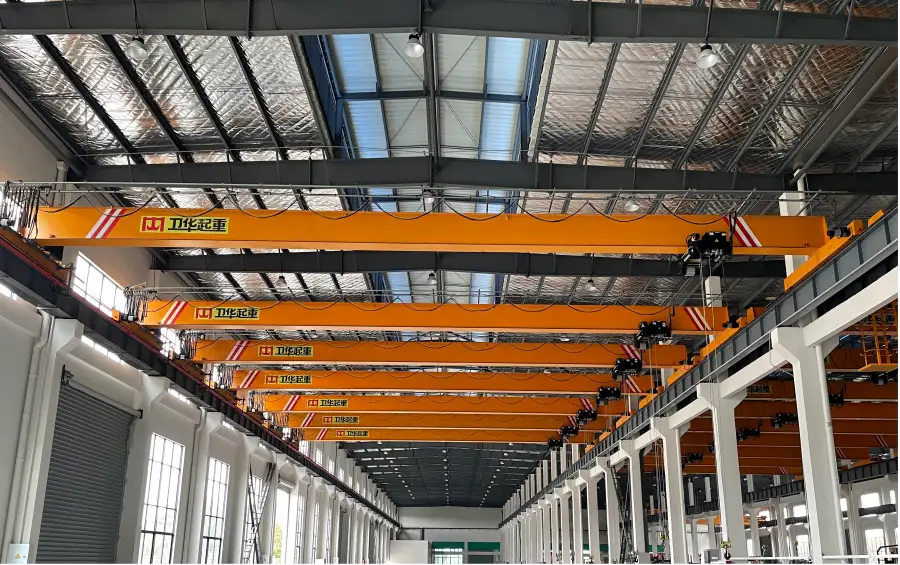
Single girder overhead cranes are one of the most commonly selected lifting solutions for factories and workshops. Their practical structure provides an excellent balance between investment cost, lifting performance, and daily operational efficiency, making them suitable for a wide range of industrial material handling applications.
Cost-Effective Solution for General Material Handling :The single girder structure requires less steel material and has a simpler design compared with double girder cranes. This helps reduce equipment investment while still providing reliable lifting performance for light and medium-duty applications.
Space-Saving Design:This makes single girder overhead cranes especially suitable for workshops where installation space is limited.With a compact structure and optimized design, single girder overhead cranes are suitable for workshops with limited installation space. Their lightweight construction can also reduce the load requirements on the supporting building structure.
Reliable Performance with Easy Maintenance:The simple structure of a single girder crane makes daily operation, inspection, and maintenance more convenient. Properly designed components help ensure stable operation and reduce unnecessary downtime during production.
Suitable for Various Industrial Applications:Single girder overhead cranes can be adapted to different working environments, including manufacturing workshops, machinery processing plants, warehouses, and maintenance facilities. By selecting the appropriate configuration, they can provide an efficient solution for various material handling tasks.
Single Girder vs Double Girder Overhead Crane: What Is the Difference?
Single girder and double girder overhead cranes have different structures and applications. The right choice depends on lifting requirements, working conditions, and investment considerations.
A single girder overhead crane is usually the preferred choice for general industrial lifting due to its economical design and flexibility. A double girder overhead crane is more suitable when higher capacity, lifting height, or heavier working conditions are required.
4.How to Choose the Right Single Girder Overhead Crane?
Choosing the right single girder overhead crane requires more than selecting the lifting capacity. The crane configuration should match your actual working conditions to ensure safe operation, efficient handling, and long-term reliability.
Before selecting a crane, buyers should consider the following key factors:
Lifting Capacity: The lifting capacity is the first factor to consider. The crane should be selected according to the maximum weight of the materials to be handled, while avoiding unnecessary oversizing that increases investment costs.
Span: The span determines the working coverage of the crane. A suitable span should match the distance between the runway beams and the required working area inside the facility.
Lifting Height: The required lifting height depends on the height of the building, the installation space, and the final position where the load needs to be placed.
Working Duty: Different applications require different working frequencies. A crane used for occasional lifting and a crane operating continuously on a production line may require different duty classifications and configurations.
Working Environment: The operating environment also affects crane selection. Factors such as indoor or outdoor installation, temperature, dust, humidity, and special working conditions should be considered during design.
Application Requirements:The application and material type should also be considered when selecting a crane. Different materials and working processes may require different crane configurations.
Power Supply and Control Method: The local power supply, voltage, and preferred control method should be confirmed before production. Options such as pendant control or remote control can be selected based on operational requirements.
Selecting a suitable single girder overhead crane requires professional evaluation of both equipment parameters and application conditions. An experienced crane manufacturer can help customers choose the right configuration based on their actual lifting needs.
5.Frequently Asked Questions About Single Girder Overhead Cranes
How many tons can a single girder overhead crane lift?
The capacity of a single girder overhead crane depends on the crane design and working requirements. In general, single girder cranes are commonly used for light and medium-duty applications, while heavier lifting tasks may require a double girder overhead crane.Common capacities include 1 ton, 2 ton, 5 ton, 10 ton, and 20 ton, depending on the application requirements.
Is a single girder overhead crane suitable for my factory?
Single girder overhead cranes are suitable for many general industrial applications, including manufacturing workshops, warehouses, machinery processing plants, and maintenance areas.The final selection depends on the required lifting capacity, working frequency, lifting height, and operating conditions.
How much does a single girder overhead crane cost?
The price of a single girder overhead crane depends on several factors, including lifting capacity, span, lifting height, working duty, crane configuration, and installation requirements and shipping conditions.. A customized quotation is usually required based on the specific application.
What information is required to quote a single girder overhead crane?
To provide an accurate quotation, customers usually need to provide lifting capacity, span, lifting height, working duty, power supply, and application details.
