


 English
 Español
 Русский
 العربية
 Français
 Deutsch
 Português
 Tiếng Việt
 Thai
Thai
 Bahasa Indonesia
 Türkçe
 Italiano

1.What Is an Indoor Bridge Crane?
An indoor bridge crane is a type of overhead lifting equipment installed inside factories, workshops, warehouses, and other industrial buildings. It uses a bridge structure, hoisting system, and runway system to move materials efficiently within a defined working area. Compared with traditional lifting equipment, indoor bridge cranes provide better space utilization, safer operation, and more efficient material handling for modern industrial facilities.
Unlike outdoor cranes, indoor bridge cranes are designed for controlled environments where the crane system can be integrated with the building structure. They are commonly used for material handling tasks such as moving raw materials, production components, machinery parts, and finished products.
Indoor bridge cranes are available in different configurations, including single girder, double girder, top running, and underhung designs. The suitable crane type depends on factors such as lifting capacity, available space, working frequency, and application requirements.
2.Main Types of Indoor Bridge Cranes
Indoor bridge cranes are available in different configurations to meet various lifting requirements. The main differences are related to crane structure, lifting capacity, installation method, and working conditions. The most common types include single-girder bridge cranes, double-girder bridge cranes, top-running bridge cranes, and underhung bridge cranes.
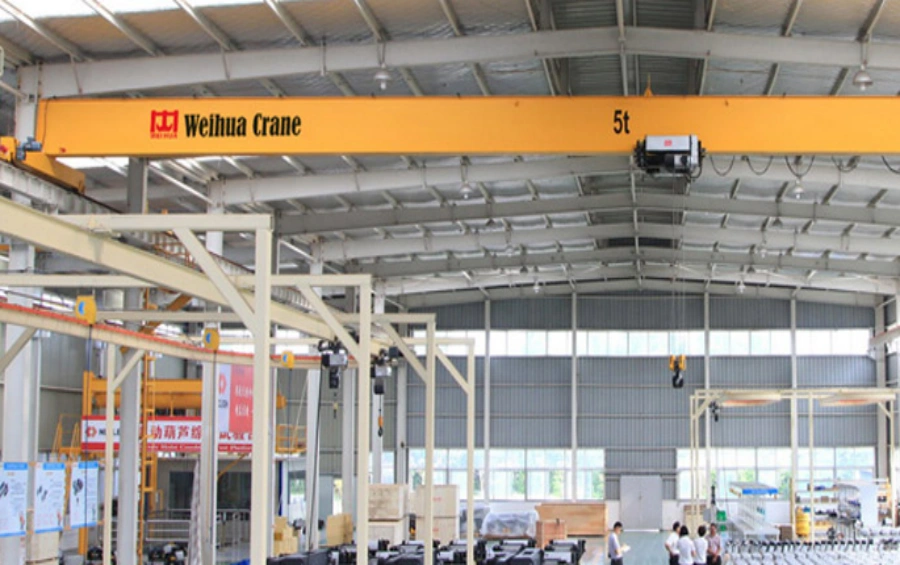
Single Girder Indoor Bridge Crane
A single girder bridge crane uses one main bridge beam to support the hoist and trolley. It is a practical and economical solution for general material handling applications where moderate lifting capacity and efficient operation are required. It is usually the preferred choice for factories with moderate lifting capacity and normal working frequency.
Due to its compact structure and lower investment cost, single girder bridge cranes are widely used in:
-Manufacturing workshops
-Warehouses
-Assembly lines
-Maintenance areas
This type of crane is suitable for customers who need reliable lifting performance without requiring heavy-duty operation.
Double Girder Indoor Bridge Crane
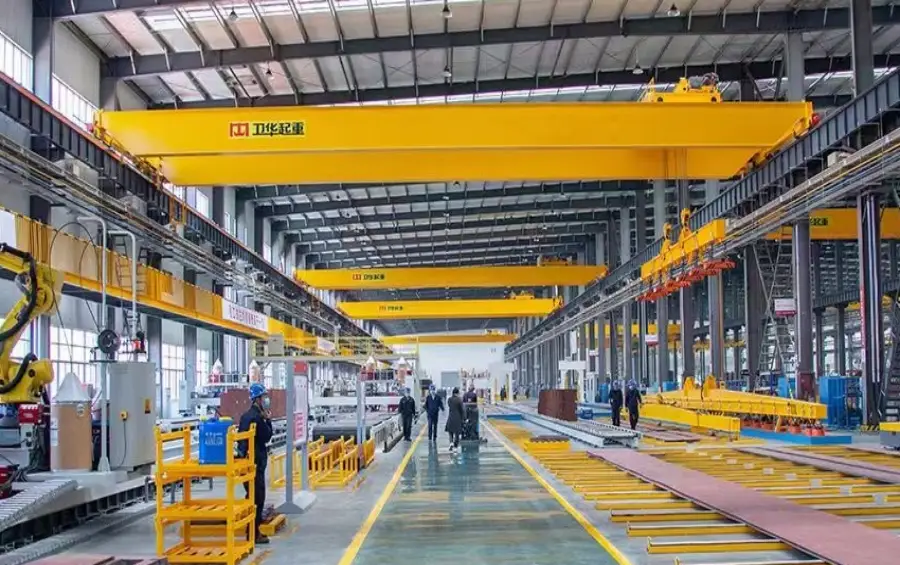
A double girder bridge crane uses two parallel main beams to provide stronger structural support and higher lifting capacity. Compared with single-girder cranes, it can handle heavier loads and provide greater lifting height.
Double-girder bridge cranes are commonly used in:
-Heavy machinery factories
-Steel processing plants
-Large manufacturing facilities
-Industrial production lines
They are a suitable choice for applications requiring frequent operation, higher capacity, or demanding working conditions.
Top Running Indoor Bridge Crane
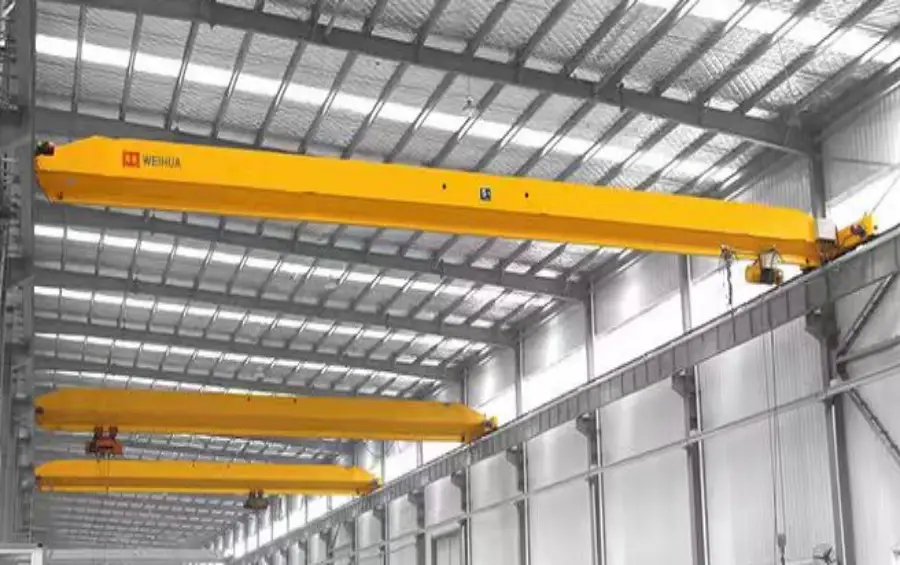
A top running bridge crane travels on runway rails installed on top of the supporting beams. This design provides stable operation and can support a wide range of lifting capacities.
Top running cranes are commonly selected for industrial facilities where:
-Higher capacity is required
-Long travel distances are needed
-Stable material handling performance is important
Underhung Indoor Bridge Crane
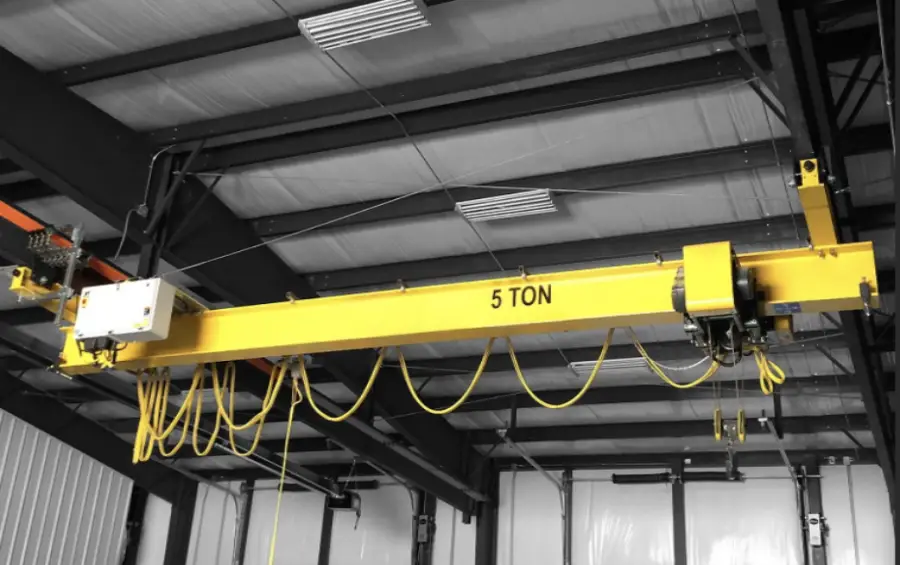
An underhung bridge crane is installed below the runway structure, making it suitable for buildings with limited headroom or specific installation requirements.
Its advantages include efficient use of available space and flexible installation, making it commonly used in:
-Small workshops
-Production areas with limited height
-Light-duty material handling applications
The right type of indoor bridge crane depends on your lifting requirements, building structure, available space, and working conditions. Understanding the differences between each crane type can help you select a more suitable solution for your facility.
3.How to Select an Indoor Bridge Crane Type?
Choosing the right indoor bridge crane depends on more than just lifting capacity. The crane type should match your building structure, working requirements, and material handling process to achieve safe and efficient operation.
Before selecting an indoor bridge crane, consider the following factors:
Lifting Requirements: The maximum load weight, lifting frequency, and operation conditions determine whether a single-girder or double-girder crane is more suitable. General material handling may only require a single girder crane, while heavier and more frequent operations may require a double girder solution.
Available Building Space: The workshop layout and available installation space are important factors in crane selection. For buildings with limited headroom, underhung cranes may provide a more flexible solution, while top running cranes are suitable for facilities with stronger runway structures.
Working Environment: The operating environment affects the crane design and configuration. Factors such as indoor layout, temperature, dust, humidity, and working frequency should be considered to ensure reliable long-term performance.
Future Expansion Requirements: When selecting an indoor bridge crane, it is also important to consider future production needs. Choosing a suitable crane configuration at the beginning can help avoid unnecessary replacement costs when lifting requirements increase.
A professional crane manufacturer can evaluate your application requirements and recommend the most suitable indoor bridge crane solution based on your specific working conditions.
4.Indoor Bridge Crane Applications
Indoor bridge cranes are widely used in various industrial environments where efficient and safe material handling is required. With different structural configurations and lifting capacities, they can be adapted to meet the needs of different industries and working conditions.
Manufacturing Workshops
In manufacturing facilities, indoor bridge cranes are commonly used to move raw materials, machine parts, and finished products during production processes. They help improve handling efficiency and reduce manual lifting operations.
Machinery and Equipment Factories
For machinery manufacturers, bridge cranes provide reliable lifting support for handling heavy components, molds, and equipment parts during assembly and maintenance.
Warehouses and Logistics Centers
Indoor bridge cranes can be used in warehouses for loading, unloading, and internal material transfer, helping optimize space utilization and improve operational efficiency.
Maintenance and Assembly Areas
In maintenance workshops and assembly areas, indoor bridge cranes provide flexible lifting solutions for equipment installation, repair work, and component replacement.
The suitable indoor bridge crane type depends on the specific application, lifting requirements, and facility conditions. Selecting the right crane configuration helps ensure safe operation and long-term performance.
5.Frequently Asked Questions About Indoor Bridge Cranes
What information is needed to quote an indoor bridge crane?
To provide an accurate quotation, customers should provide lifting capacity, span, lifting height, working duty, installation environment, and application details.
What is the difference between a single girder and a double girder indoor bridge crane?
The main difference is the bridge structure. A single girder crane uses one main beam and is generally more economical for light and medium-duty applications. A double girder crane uses two main beams, providing higher lifting capacity and better performance for heavy-duty operations.
Which indoor bridge crane is suitable for a small workshop?
For small workshops with limited lifting requirements and available space, a single girder or underhung bridge crane is often a suitable choice. The final selection depends on factors such as load capacity, building structure, and working frequency.
How do I choose the right indoor bridge crane for my factory?
The selection depends on several factors, including lifting capacity, span, lifting height, working duty, installation conditions, and the type of materials being handled. A professional crane manufacturer can help determine the most suitable configuration based on your application.
How much does an indoor bridge crane cost?
The cost of an indoor bridge crane depends on the crane type, lifting capacity, span, configuration, working conditions, and customization requirements. A detailed quotation usually requires specific project information.
Can indoor bridge cranes be customized?
Yes. Indoor bridge cranes can be customized according to different factory layouts and operational requirements, including lifting capacity, dimensions, control methods, and working conditions.
