



What Is a European Electric Hoist?
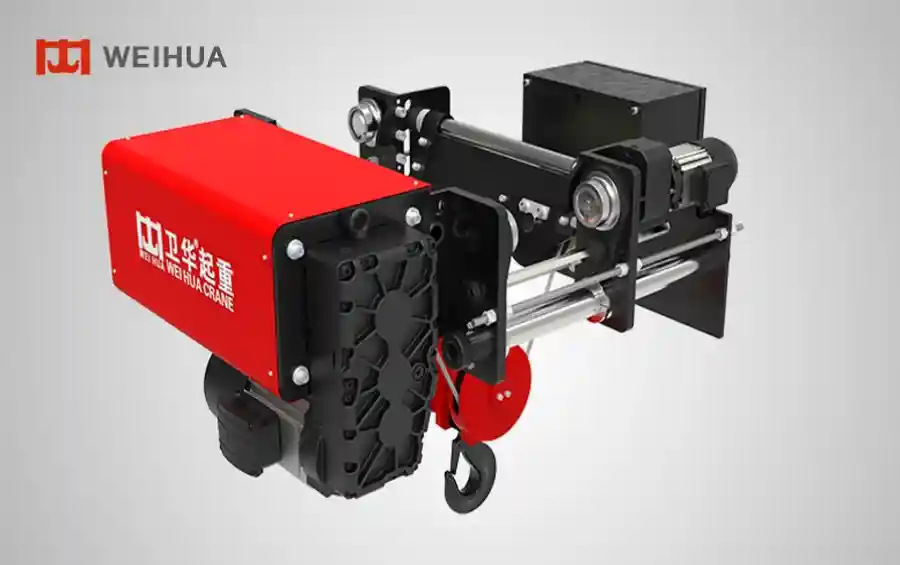
A European electric hoist is a compact electrically powered lifting mechanism developed according to modern crane design principles.
It normally integrates the lifting motor, reducer, drum, wire rope system, brake, hook block, and traveling mechanism into a relatively compact arrangement.
Compared with many traditional electric wire rope hoists, the European design focuses strongly on:
-Reduced overall dimensions
-Lower dead weight
-Better use of vertical space
-Smooth lifting and traveling
-Modular components
-Easier maintenance
-Improved positioning control
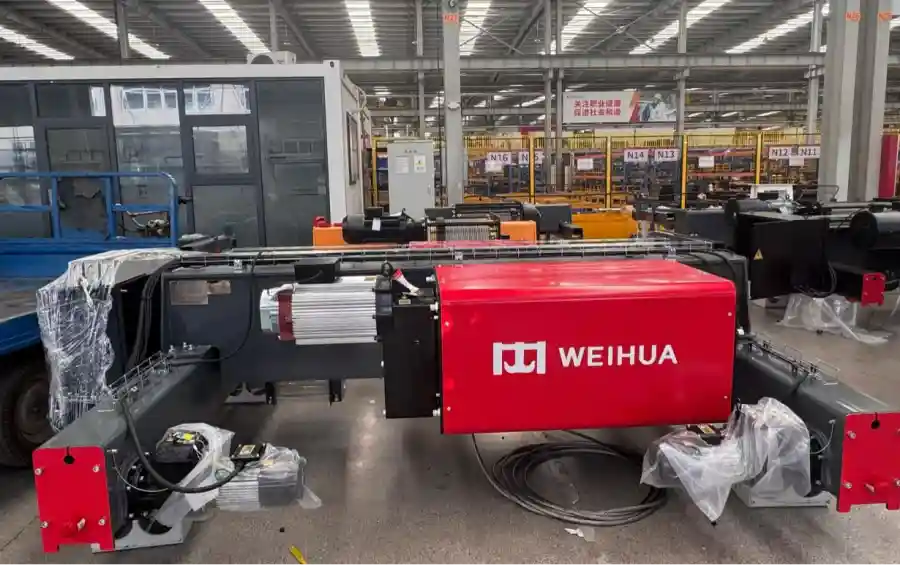
The hoist can operate independently on a monorail or be integrated into an overhead crane or gantry crane.
Its compact dimensions are particularly useful when a factory has limited ceiling height or when the customer wants to maximize effective hook travel.
Main Features of a European Electric Hoist
The real advantage of a European-style hoist is not one individual component. It comes from the way the complete lifting system is designed.
Compact Structure
The motor, reducer, drum, and supporting structure are arranged to minimize unnecessary space.
A smaller hoist body reduces the overall dimensions of the crane and can improve both vertical and horizontal hook approach.
Lightweight Design
Optimized components can reduce the self-weight of the lifting mechanism.
Lower dead weight can reduce loads on:
-Crane girders
-End carriages
-Runway beams
-Building columns
-Foundations
For a new workshop, this may also help optimize the supporting steel structure.
Smooth Lifting and Traveling
Variable frequency control can be used for lifting and traveling movements.
Instead of sudden starts and stops, the mechanism accelerates and decelerates gradually.
This helps reduce:
-Load swing
-Mechanical impact
-Wheel shock
-Sudden stress on the crane structure
Smooth movement is especially useful during assembly, equipment installation, and precision material handling.
Modular Design
Modern electric hoists are commonly designed around modular components.
Motors, brakes, reducers, drums, wheels, and electrical devices can be arranged as functional modules.
This can make inspection, component replacement, and maintenance more convenient.
Reliable Braking
The lifting brake is one of the most important safety components of any hoist.
A properly designed European electric hoist uses a braking system matched to the lifting motor and duty requirements to provide reliable load holding during normal operation.
Efficient Rope Arrangement
The drum, rope guide, pulley system, and hook block are arranged to provide stable wire rope winding.
Correct rope guidance reduces unnecessary rope wear and helps maintain consistent lifting performance.
Where Can a European Electric Hoist Be Used?
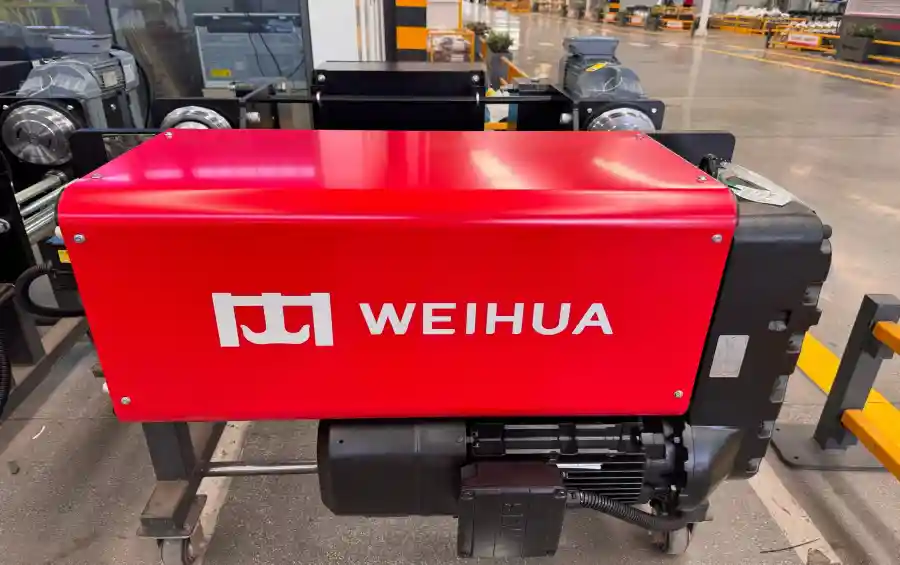
European electric hoists are used across many general industrial applications.
Machinery Manufacturing
Machine shops regularly move:
-Components
-Motors
-Gearboxes
-Fixtures
-Dies
-Finished equipment
Smooth movement makes the hoist suitable for assembly and maintenance operations.
Automotive and Component Production
Automotive factories often require frequent movement of molds, tooling, components, and production equipment.
Variable-speed lifting can help operators position loads more accurately during production and maintenance.
Warehouses and Logistics Facilities
When installed on an overhead crane or monorail, the hoist can move materials between storage, production, and loading areas.
Compact construction is useful where warehouse headroom must be used efficiently.
Equipment Assembly
Large equipment assembly often requires slow and accurate load movement.
A European electric hoist can provide controlled lifting for positioning components during installation.
General Manufacturing
The hoist can also be used in:
-Steel fabrication workshops
-Pump and valve production
-Electrical equipment factories
-Paper machinery facilities
-Rail equipment production
-Maintenance workshops
The final configuration should always be selected according to the actual duty cycle and environment.
How to Select a European Electric Hoist?
Selecting the correct hoist involves more than choosing the lifting capacity.
Several project parameters should be confirmed before quotation.
1. Lifting Capacity
Determine the maximum actual load.
The rated capacity must be suitable for the heaviest load expected during normal operation.
Loads should not be estimated only from typical daily lifting weight.
2. Lifting Height
Lifting height is the vertical distance the hook needs to travel.
Consider:
-Floor level
-Working platform height
-Crane runway elevation
-Maximum equipment height
-Required hook position
If the workshop has restricted headroom, provide a section drawing of the building.
3. Working Duty
A hoist lifting a load several times per week has very different requirements from one operating continuously during a production shift.
Useful information includes:
-Lifts per hour
-Working hours per day
-Average load
-Maximum load
-Typical lifting distance
The duty requirement affects the selection of motors, brakes, reducers, and other components.
4. Required Lifting Speed
High speed is useful when loads need to travel long vertical distances.
However, slow speed is more useful for accurate positioning.
A variable-speed system can provide both efficient transportation and controlled final positioning.
5. Traveling Arrangement
Confirm whether the hoist will be used on:
-A single girder crane
-A double girder crane
-A monorail
-A gantry crane
-A fixed lifting point
The supporting beam dimensions should also be provided when relevant.
6. Power Supply
Voltage and frequency vary by country and factory.
The electrical system should therefore be designed according to the customer’s actual power supply.
7. Operating Environment
The supplier should know whether the hoist will operate:
-Indoors or outdoors
-In high humidity
-In dusty conditions
-At high or low temperatures
-In corrosive environments
-In environments with special safety requirements
Special environments may require a dedicated lifting solution rather than a standard industrial hoist.
European Electric Hoist FAQ
1.What is a European electric hoist?
A European electric hoist is a compact lifting mechanism designed with optimized headroom, lightweight components, modular construction, and smooth drive control.
It is commonly used on overhead cranes, gantry cranes, and monorail systems.
2.What is the main advantage of a European electric hoist?
One of its main advantages is efficient use of space.
The compact structure can reduce the distance between the hook and crane beam, helping maximize effective lifting height inside the workshop.
3.Is a European electric hoist suitable for a low-headroom workshop?
Yes.
Low-headroom applications are one of the common reasons for selecting this type of hoist.
The exact hook approach depends on lifting capacity, crane structure, beam dimensions, and hoist configuration.
4.Can it be installed on an existing overhead crane?
In many cases, yes, but the existing crane must be evaluated first.
The supplier should check the main girder, track dimensions, available space, electrical system, wheel loads, and structural capacity before confirming compatibility.
A Compact Lifting Solution Should Match the Whole Crane
A European electric hoist should not be selected as an isolated component.
Its dimensions, wheel loads, lifting speed, control system, working duty, and installation arrangement all affect the final performance of the crane.
A well-designed system can improve usable lifting height, reduce unnecessary structural weight, provide smoother load handling, and simplify daily operation.
For projects involving new cranes or upgrades to existing lifting systems, WEIHUA can configure electric hoist solutions according to the required capacity, lifting height, runway arrangement, working duty, and workshop conditions.
Send us your lifting capacity, lifting height, installation type, power supply, working frequency, and workshop or crane drawing to obtain a suitable European electric hoist solution.
